China’s Robots Built the Great Wall Using 80,000 Building Blocks in 15 Hours at WAIC 2026
Six AI-powered robots amazed visitors at the World Artificial Intelligence Conference (WAIC 2026) in Shanghai by working together for nearly 15 continuous hours to build a 3.5-meter-long model of the Great Wall of China. Using 81,920 miniature building blocks, the demonstration highlighted the rapid progress of embodied AI, where intelligent systems interact directly with the physical world.
The project was developed by Chinese AI company StepFun and robotics firm Dexmal. The robotic team included four precision robotic arms and two wheeled humanoid robots. Each machine handled a different section of the structure while coordinating with the others to complete the model with high accuracy.
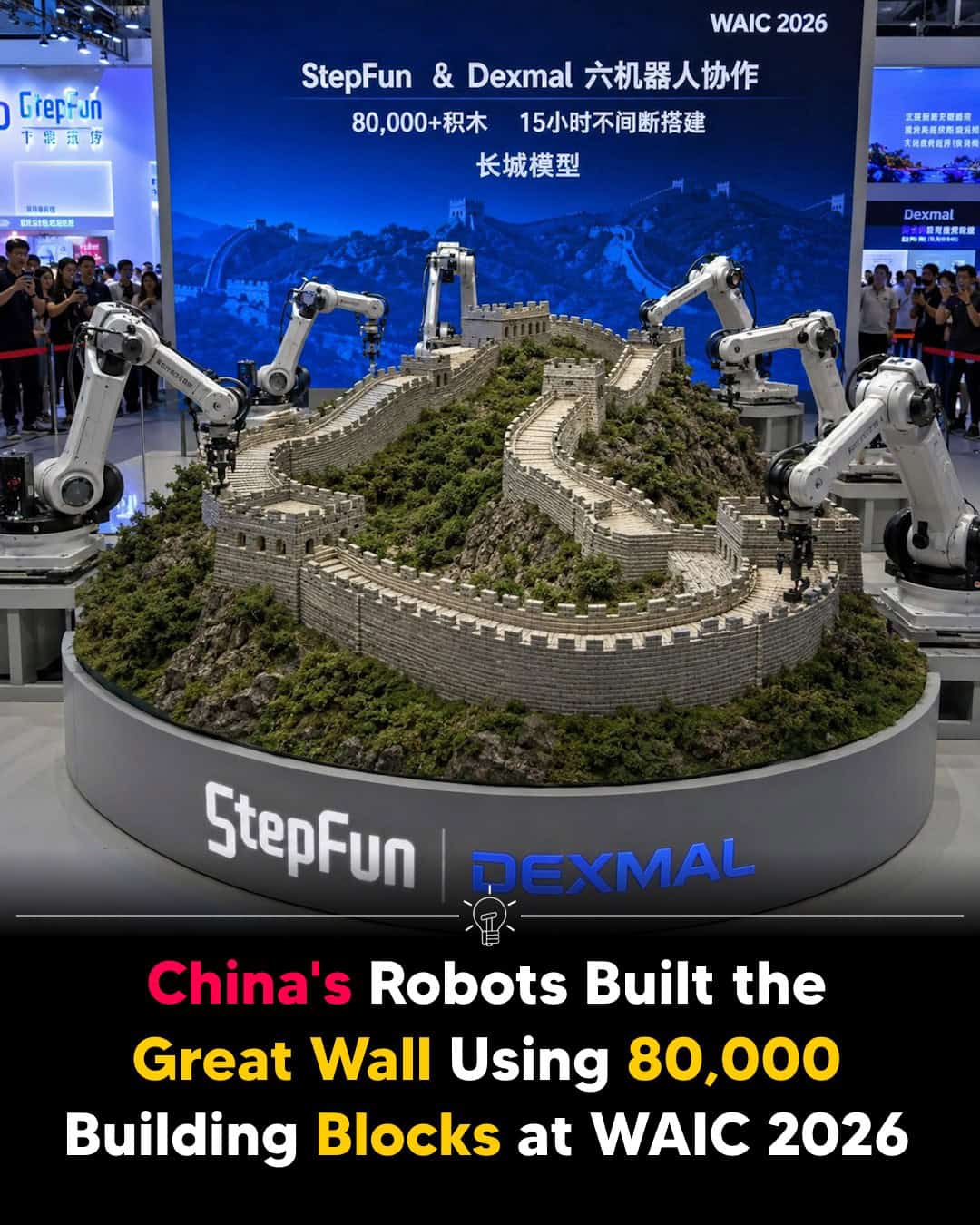
Although the huge number of building blocks attracted attention, experts said the real achievement was the robots’ long-term reliability. They successfully performed thousands of precise, repetitive movements for hours while maintaining coordination and correcting errors when needed, without interrupting the construction process.
The Great Wall demonstration reflected a major theme at WAIC 2026, where embodied AI moved beyond laboratory research into practical applications. The conference brought together more than 1,100 companies, showcased over 3,000 AI exhibits, and featured more than 300 global product launches across manufacturing, robotics, and AI infrastructure.
Industry experts believe this technology has greater potential in factories than in homes. Collaborative robots can perform complex and repetitive tasks in electronics manufacturing, automotive assembly, warehouses, and logistics while maintaining consistent quality and reducing production errors.
Another key advantage of embodied AI is teamwork. Instead of relying on a single robot, multiple intelligent machines can divide work, communicate, and adjust their roles in real time. Similar multi-robot systems demonstrated at WAIC 2026 showed how AI can manage real production environments more efficiently.
The Great Wall project was more than an impressive exhibition. It demonstrated that collaborative AI-powered robots are becoming increasingly dependable for industrial use. As embodied AI continues to advance, such systems could play a growing role in the future of global manufacturing and automated production.
-
 New York Imports Record 52 GWh of Canadian Electricity
-
 Germany’s 124 GW Solar Generation Now Exceeds Coal Power
-
 Arkansas School Uses Rooftop Solar to Raise Teacher Pay
-
 Germans Install Solar Panel Fences for Free Electricity
-
 Powerful Electrophorus Voltai Eel that Can Shock up to 860V
-
 Japanese Wearable Device Generates Electricity from Sweat