China Built 162 sq-mi of Solar Panels on the World’s Highest Tibetan Plateau – Generating 17.7 GW of Clear Power
China has transformed the high-altitude Tibetan Plateau into one of the world’s largest renewable energy hubs. The Talatan Solar Park in Qinghai Province now spans about 420 square kilometers (162 square miles), making it larger than Las Vegas. It has reached 17.73 GW of installed solar capacity, making it the world’s largest photovoltaic power park by capacity. The project continues to expand with new phases.
Located nearly 3,000 meters (10,000 feet) above sea level, the site benefits from thin air, strong solar radiation, and cool temperatures. These conditions improve solar panel efficiency and reduce performance losses caused by heat. The vast plateau also provides large areas of open land for renewable energy development.
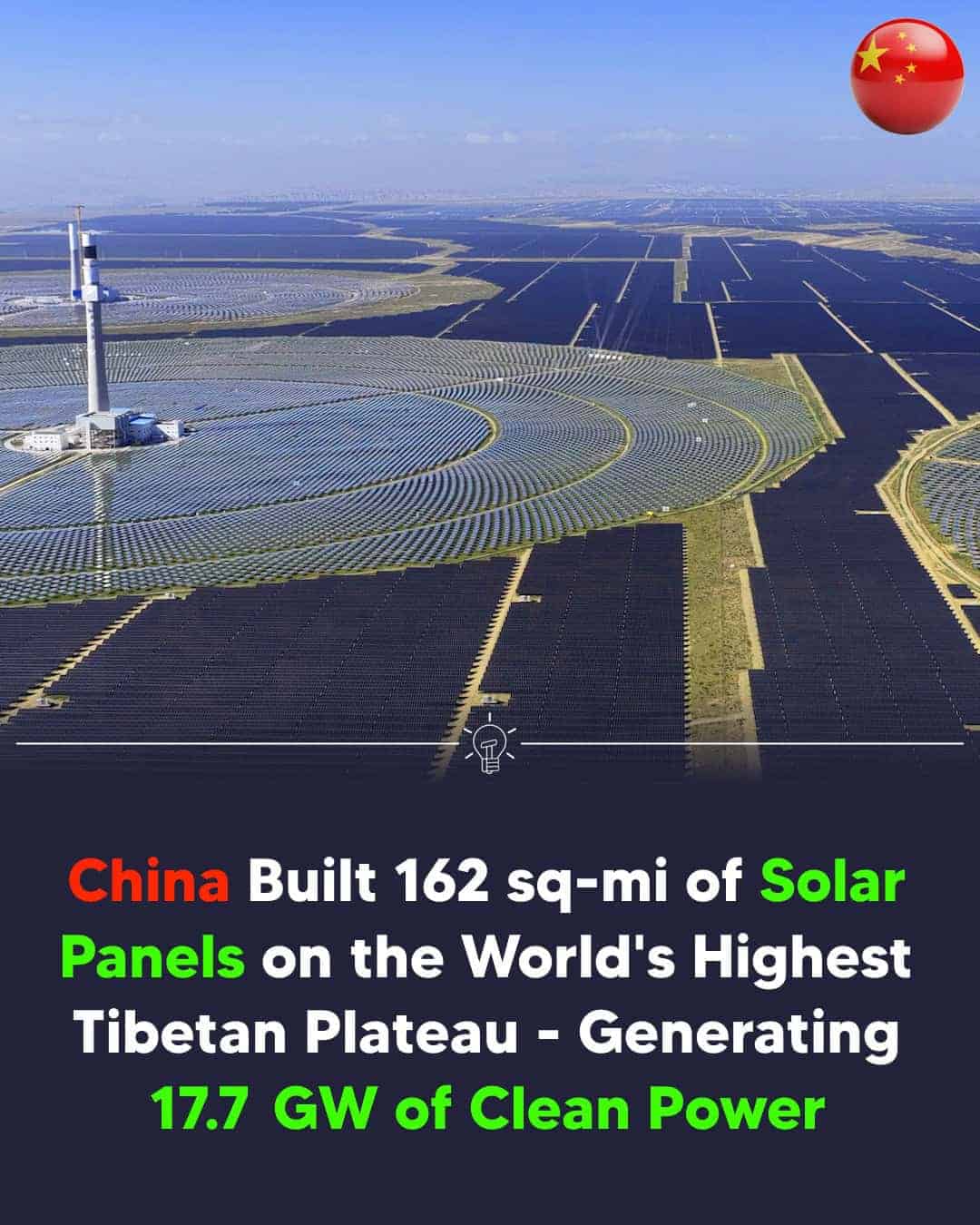
The renewable hub combines solar farms with nearby wind turbines and hydropower stations. Solar power dominates during the day, while wind often peaks at night. Hydropower helps stabilize the grid when renewable output changes. High-voltage transmission lines then carry electricity to major cities and industrial regions more than 1,600 kilometers (1,000 miles) away.
China is also expanding advanced transmission infrastructure. The Qingyu HVDC project connects the Talatan energy base with distant demand centers. New concentrated solar power (CSP) plants, including a recently connected 100 MW tower CSP facility, are improving grid reliability by supplying electricity after sunset.
Low-cost renewable electricity is attracting new industries to Qinghai. Solar manufacturing, cloud computing, and AI data centers are expanding in the region. The cold mountain climate reduces cooling needs, allowing some data centers to use about 40% less electricity for cooling than similar facilities at sea level. Waste heat from servers is also reused to warm nearby buildings.
The massive solar park is also delivering environmental benefits. The panels reduce wind speed and soil evaporation, helping restore vegetation across previously degraded land. Grass now grows beneath the panels, while sheep continue grazing between solar arrays in a “PV plus grazing” model that supports local herders.
China continues adding solar panels, wind farms, energy storage, and transmission lines across the Tibetan Plateau. Although coal remains a major part of the country’s energy mix, the Talatan renewable hub demonstrates China’s long-term strategy to build a vast clean energy network that supports industry, electric transportation, and AI development while lowering carbon emissions.
Sources:
- Ohio State University
- People Daily
- China Daily
Related Posts:
- China Builds 300 MW Sahara Solar Plant for Algeria’s 15 GW Plan
- China’s Dual-Use Solar Farms & Photovoltaic Sheep Power Farms
- MSU Develops Clear Solar Glass That Generates Electricity
- US Wind & Solar Reach Record 760,000 GWh – 17% of Power Grid
- Texas Solar Set to Surpass Coal Power for the First Time
- New French Law Requires Solar Panels Over Parking Areas
- Germany’s 124 GW Solar Generation Now Exceeds Coal Power
-
 Amazon Puts 1st 27 Mercedes Electric Trucks On German Roads
-
 BYD Orders 10 More Ships to Carry 130,000+ EVs Worldwide
-
 BYD Launches Electric Truck to Rival Tesla Semi in Europe
-
 BYD’s New Electric Truck for EU Beats Tesla Semi in Almost Every Metric
-
 Windrose Electric Trucks Enter Australia’s Long-Haul Freight
-
 UK Battery Injects Hundreds of MW Power into Grid in 1 Sec