Germany’s 124 GW Solar Generation Now Exceeds Coal Power
Germany Just Hit 124 GW of Solar Power – Now Produces More Electricity Than All Coal Plant Combined
Germany generated a record 43.2 TWh of electricity from solar power during the first half of 2026. This development marks a 10% increase from the same period last year. According to the Fraunhofer Institute for Solar Energy Systems (ISE), the country’s installed solar capacity also reached 124.9 GW, with large ground-mounted solar farms contributing most of the recent growth.
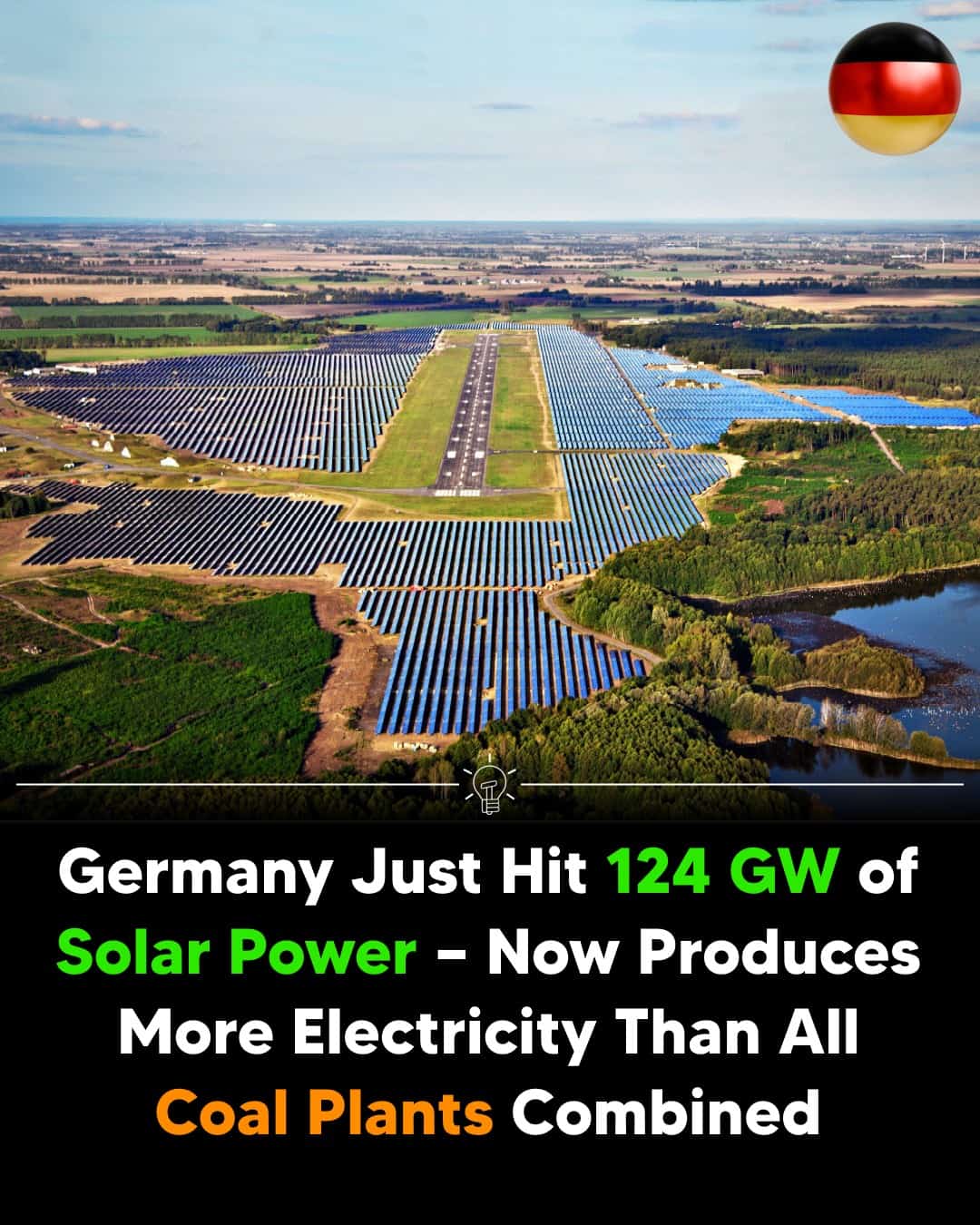
Solar energy now supplies more than 18% of Germany’s net public electricity generation, reinforcing its role as one of the nation’s leading energy sources. Overall, renewable energy accounted for 61.8% of Germany’s electricity generation during the first half of 2026, while wind power remained the largest contributor. Strong renewable output also helped shield electricity prices from rising natural gas costs earlier this year.
The record follows another strong year for Germany’s solar sector. The country added more than 16 GW of new solar capacity in 2025, and solar power generated more electricity than lignite coal for the first time. The continued expansion reflects Germany’s rapid transition toward cleaner electricity and reduced reliance on fossil fuels.
Rapid solar growth is also creating new challenges for the power grid. High solar production during sunny periods has increased the number of hours with very low or negative electricity prices. To improve grid flexibility, Germany expanded battery storage significantly in the first half of 2026, commissioning more large-scale battery capacity than during the entire previous year. Even so, Fraunhofer ISE says additional storage will be needed to make full use of surplus renewable electricity.
Germany plans to continue expanding solar capacity as it works toward its 2030 clean energy targets. Researchers say the current pace is encouraging, but further investment in solar installations, battery storage, and grid infrastructure will be essential to support a reliable, low-carbon electricity system over the coming years.
Source: Fraunhofer Institute for Solar Energy Systems – ISE