UAE Researchers Grow Corps in The Desert Using Seawater and and Solar Panels
Scientists in the United Arab Emirates are advancing farming methods that grow crops in desert conditions using seawater and solar energy. The technology combines solar-powered desalination with climate-controlled greenhouses. It aims to reduce dependence on scarce freshwater while increasing food production in arid regions.
The system uses seawater to cool greenhouses before it is desalinated into freshwater for irrigation. Solar energy powers much of the process, reducing energy costs and emissions. Researchers are also developing salt-tolerant crops that can grow in saline conditions with little or no freshwater.
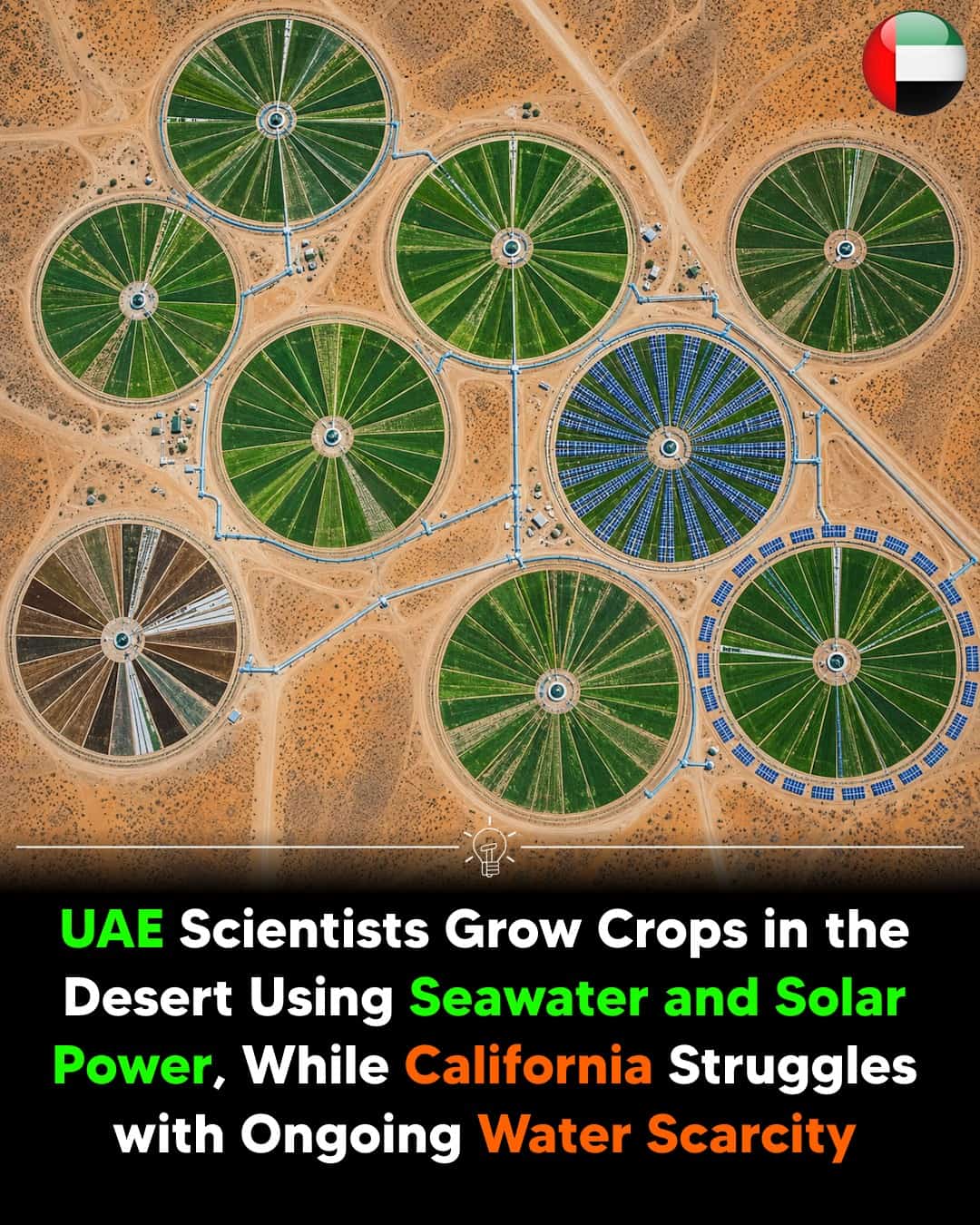
One of the leading crops is Salicornia, a halophyte that naturally grows in salty environments. Researchers at the International Center for Biosaline Agriculture (ICBA) are expanding trials of Salicornia and other salt-tolerant plants. The goal is to produce food, animal feed, and bio-based products on land that was previously unsuitable for farming.
The UAE is also investing heavily in sustainable desalination. Dubai’s Hassyan seawater reverse-osmosis project is nearing completion. When fully operational in 2027, it will produce up to 180 million imperial gallons of freshwater per day using energy-efficient technology powered by clean energy.
The need for new farming methods is growing worldwide. California’s Central Valley continues to face drought, groundwater depletion, and tighter water regulations. Farmers are searching for ways to produce more food while using less freshwater and adapting to a changing climate.
Experts say seawater farming is not a universal solution. It works best in coastal desert regions with abundant sunshine and access to seawater. Infrastructure, energy supply, and crop selection remain important factors before the technology can be expanded on a large scale.
Researchers believe combining renewable energy, desalination, and salt-tolerant crops could strengthen global food security. As freshwater becomes more limited, these technologies may help transform deserts into productive farmland while reducing pressure on rivers and underground aquifers.
Related Posts:
- Texas Solar Set to Surpass Coal Power for the First Time
- EU Solar Generates Record 25% of Electricity for First Time
- China Builds World’s Largest 17.7 GW Solar Park on Tibetan Plateau
- Morocco’s Solar Project Aims to Export Power to Europe via Undersea Cable
- China Builds 300 MW Sahara Solar Plant for Algeria’s 15 GW Plan
- MSU Develops Clear Solar Glass That Generates Electricity
- China’s Dual-Use Solar Farms & Photovoltaic Sheep Power Farms
- Germany’s 124 GW Solar Generation Now Exceeds Coal Power
- Germans Install Solar Panel Fences for Free Electricity
-
 Morocco’s Solar Project Aims to Export Power to Europe via Undersea Cable
-
 Denmark Converts Gas Caverns Into Hydrogen Reserves for Winter
-
 California Solar Power Beats Natural Gas for First Time
-
 University of Texas Creates Jacket that Makes Water From Air
-
 EU Solar Generates Record 25% of Electricity for First Time
-
 World’s First 932-Mile Hydrogen Car Refuels in Minutes