Germans Install Solar Panel Fences for Free Electricity
Germany’s Solar Panel Fences Turn Garden Boundaries into Mini Power Plants
Germany is expanding the use of solar energy in an innovative way by transforming ordinary garden fences into electricity-generating infrastructure. Instead of serving only as property boundaries, vertical solar fences equipped with bifacial photovoltaic modules allow homeowners, farms, and businesses to generate clean electricity while making productive use of existing space. The concept supports Germany’s broader energy transition by converting unused boundary areas into renewable energy assets.
Unlike conventional rooftop solar systems, solar fences provide an alternative for properties with shaded, poorly oriented, or structurally unsuitable roofs. The vertically mounted bifacial panels capture sunlight from both sides, producing electricity throughout the morning and late afternoon when electricity demand is often higher. This generation profile can complement traditional rooftop systems, which typically reach peak output around midday.
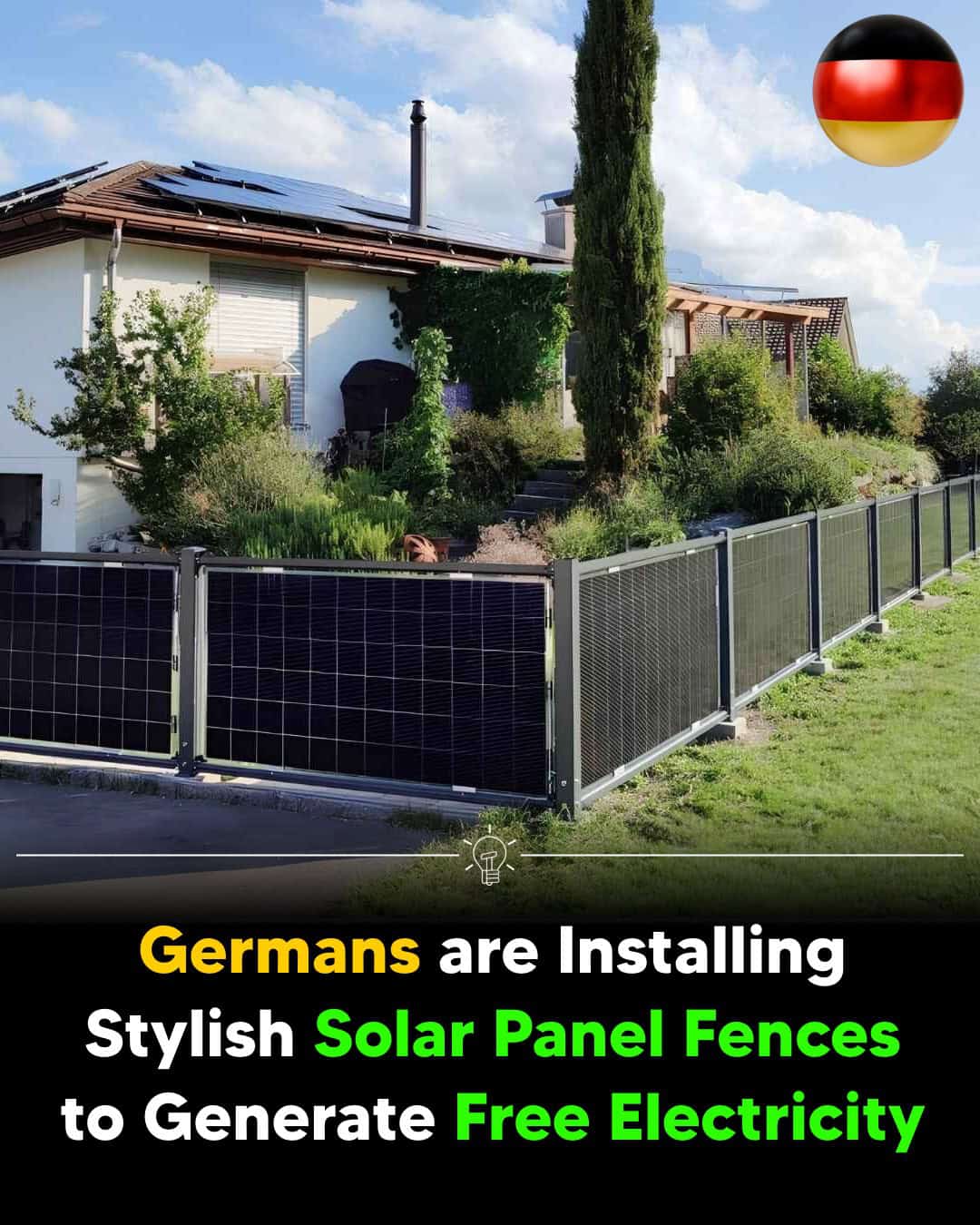
The technology is gaining attention as Germany and other European countries seek greater energy independence and lower household electricity costs. Following recent energy market volatility and efforts to reduce reliance on imported fossil fuels, many homeowners are looking for practical ways to produce more of their own electricity. Solar fences also eliminate the need for additional land, making them particularly attractive in densely populated residential areas where space is limited.
Although vertical panels generally receive less direct midday sunlight than optimally tilted rooftop arrays, their bifacial design helps compensate by collecting reflected and diffuse light from both sides.
Under favorable conditions, a typical 10-meter (33-foot) residential solar fence can deliver roughly 1 to 1.5 kW of installed capacity and generate around 5 to 7.5 kWh of electricity per day. The generated power is enough to offset a portion of a home’s daily energy consumption for lighting, appliances, and other household loads.
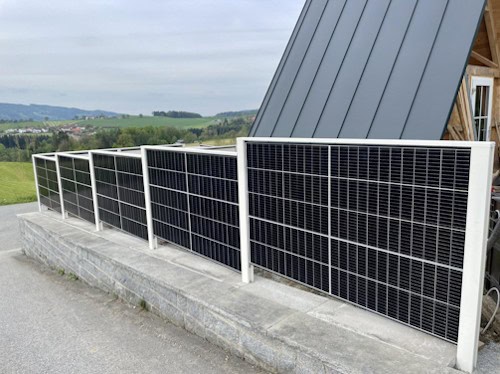
Germany is also leading commercial deployment of the technology. Renewable energy company Next2Sun has installed numerous vertical solar fence projects across Europe and supplied the technology for a major installation at Frankfurt Airport.
The airport project features approximately 37,000 vertically mounted solar modules along a 2.8-kilometer stretch. The project expected annual generation is up to 17.4 million kWh of clean electricity. As solar fences continue to gain adoption, they demonstrate how everyday infrastructure can be transformed into distributed renewable energy systems that contribute to a cleaner and more resilient electricity grid.
Source: SolarPower Europe