US Space Force Awards $16 Million to Bring Nuclear Reactors Back to Space after 60 years
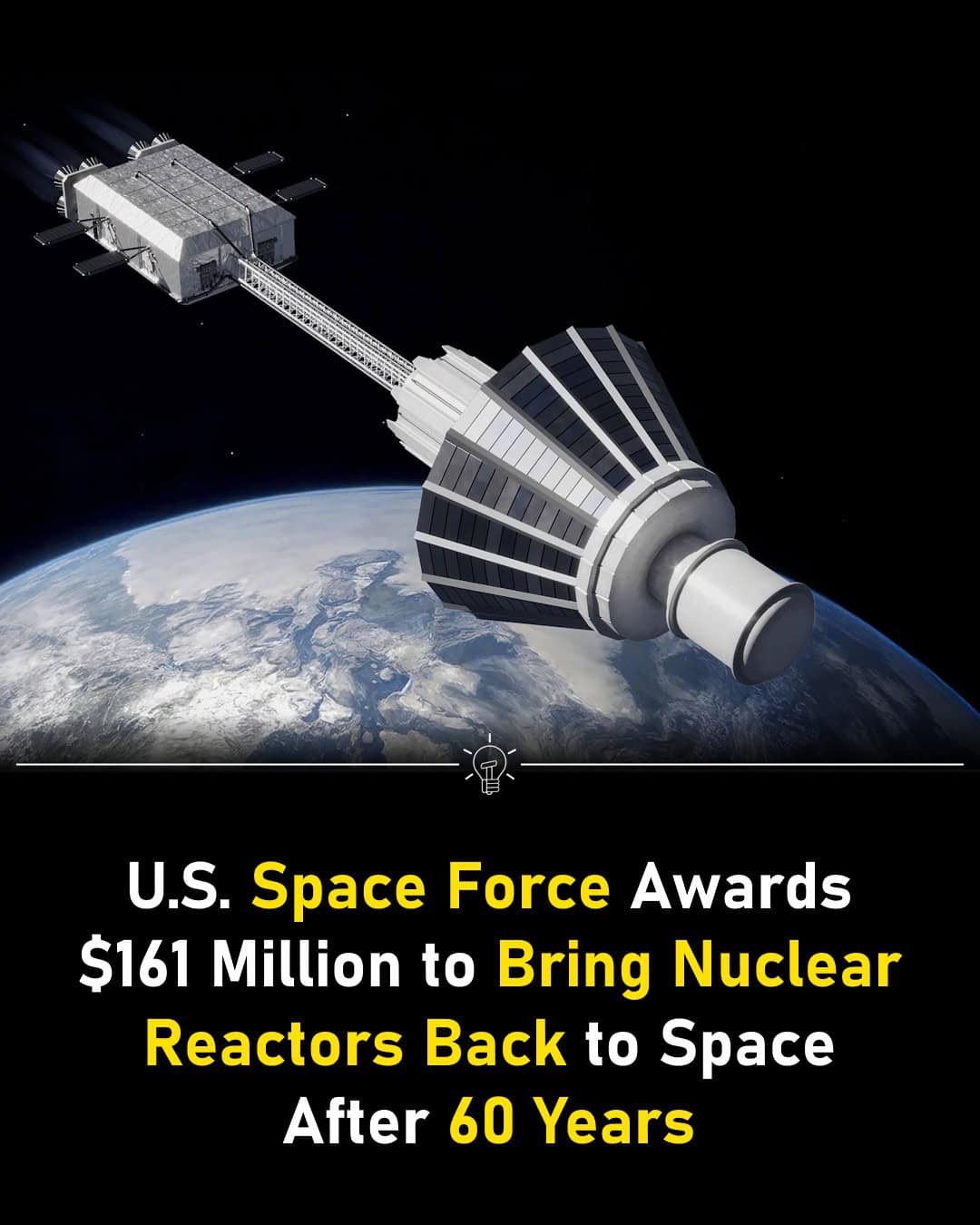
The United States is moving toward a major return of nuclear fission power in space. Antares Nuclear has received a $161 million Department of Defense award to develop and demonstrate its R1-S space reactor, then integrate the system with a spacecraft for flight certification. The program could eventually put a U.S. nuclear reactor back into orbit more than six decades after the country’s only previous space fission reactor mission.
The reactor being developed for the mission is called R1-S, short for R1-Space. Antares says it is adapted from the architecture of its terrestrial R1 microreactor, but it is not simply a copy of an earlier space reactor. The company plans to use technologies including sodium heat pipes, moderator blocks, control drums and a closed Brayton-cycle power system. The first R1-S block is targeting more than 35 kilowatts of electric power.
The project builds on a significant nuclear milestone achieved by Antares earlier this year. On June 4, 2026, the company’s Mark-0 microreactor reached initial, zero-power criticality at Idaho National Laboratory under the U.S. Department of Energy’s Reactor Pilot Program. The Mark-0 is a precursor to the electricity-producing R1 system and demonstrated a self-sustaining nuclear chain reaction, but it is not itself the planned orbital reactor.
Antares is also developing the Mark-1 reactor, which is designed to generate electricity using a nitrogen closed Brayton-cycle power-conversion system. The company says Mark-1 is scheduled for an extended test in 2027 and is expected to operate for more than six months. These ground tests are intended to provide additional experience with reactor operation and power conversion before the more demanding space system moves toward flight certification.
The potential advantage of nuclear power in space is continuous electricity. Solar panels become less effective as spacecraft move farther from the Sun, and spacecraft can also spend extended periods in darkness or in environments where solar power is limited.
A fission reactor can operate independently of sunlight and could provide sustained power for high-demand systems such as advanced computing, propulsion-related technologies and other spacecraft equipment. NASA has identified solar-independent nuclear power as particularly useful for long-duration and deep-space missions.
The historical gap is significant. NASA records show that SNAP-10A, launched on April 3, 1965, was the first and only U.S. fission reactor launched into space. SNAP-10A produced about 500 watts of electrical power and operated for 43 days before a spacecraft command caused it to shut down. The United States has since used radioisotope power systems on numerous missions, but those systems are fundamentally different from a nuclear fission reactor.
If go well as planned, the R1-S program could mark the first U.S. return of fission power to space since 1965 and establish a new source of continuous electrical power for future military and scientific spacecraft.
Related Posts:
- SpaceX Launches First Commercial Nuclear CubeSat in Orbit
- China Plans Tesla-Inspired Laser Power Network for the Moon
- Germany’s Electric Drone Hits 699 km/h, Eyes World Record
- AI Firefighting Drones Target Wildfires Before they Spread
- Hybrid-Electric Aircraft Reaches 30,000 Feet in Historic Test
-
 Toyota Confirms Hydrogen Hilux with 300kW Power for 2028
-
 Amazon Puts 1st 27 Mercedes Electric Trucks On German Roads
-
 BYD Orders 10 More Ships to Carry 130,000+ EVs Worldwide
-
 BYD Launches Electric Truck to Rival Tesla Semi in Europe
-
 BYD’s New Electric Truck for EU Beats Tesla Semi in Almost Every Metric
-
 Windrose Electric Trucks Enter Australia’s Long-Haul Freight