Hybrid-Electric Aircraft Reaches 30,000 Feet in Historic Test
World’s First Hybrid-Electric Aircraft Reaches over 30,000 Feet in Historic Aviation Test
GE Aerospace has completed the world’s first high-altitude flight of a hybrid-electric aircraft, marking a major step toward cleaner commercial aviation. The modified Saab 340B test aircraft successfully flew above 30,000 feet, matching the cruising altitude of many passenger airliners. The milestone was officially announced at the 2026 Farnborough International Airshow.
The aircraft combines a conventional GE CT7 turboprop engine with a megawatt-class hybrid-electric propulsion system. This design allows the electric motor and gas turbine to work together, improving fuel efficiency, lowering emissions, and providing additional power during takeoff and climb.
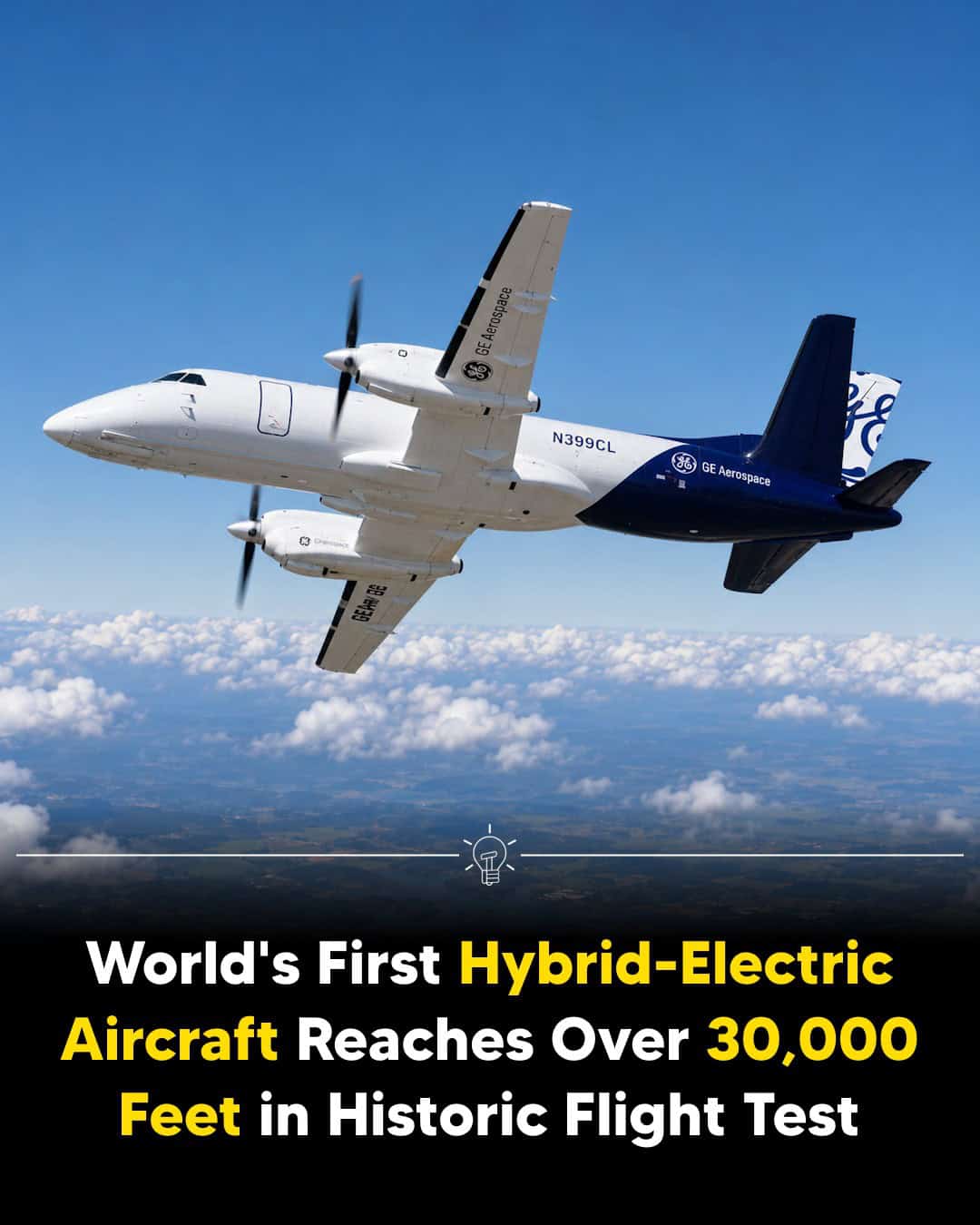
The project is a joint effort between GE Aerospace, NASA, Boeing, and BETA Technologies under NASA’s Electrified Powertrain Flight Demonstration (EPFD) program. Before flight testing, the propulsion system was validated at NASA’s Electric Aircraft Testbed, including simulations equivalent to operating at 45,000 feet.
Flight testing began in early May 2026, and the aircraft reached more than 30,000 feet in hybrid-electric mode on May 20. During testing, it remained in hybrid operation for more than two hours, demonstrating reliable performance at commercial airline cruising altitude.
The aircraft also completed a transatlantic journey from New York to the United Kingdom with stops in Canada, Greenland, Iceland, and Scotland before arriving at the Farnborough Airshow. Engineers operated the hybrid-electric system during every leg of the ferry flight, proving its capability under real-world operating conditions.
Although today’s batteries remain too heavy for large fully electric airliners, hybrid-electric propulsion offers a practical path to reducing aviation fuel consumption and carbon emissions. The technology is expected to play an important role in the next generation of more efficient commercial aircraft.
GE Aerospace says this achievement moves hybrid-electric propulsion from laboratory testing to real-world flight. The successful demonstration provides valuable data for future aircraft engine development and could help shape more sustainable air travel over the coming decades.