Is it Safe to Wash Solar Plates During the Sunshine?
Solar panels are designed to be durable and weather-resistant. They are manufactured to withstand harsh conditions, including heavy summer rain at noon. Regarding electric shock hazards, modern solar systems are properly grounded. This is why professionals are often seen washing solar panels during the daytime, sometimes even without turning off the system.
Despite the potential risk of electric shock, washing solar panels in direct sunlight is generally not considered dangerous. However, it is not recommended to clean solar panels during intense sunlight for several reasons. There are important safety considerations and best practices to keep in mind when cleaning solar panels during peak sunlight hours.
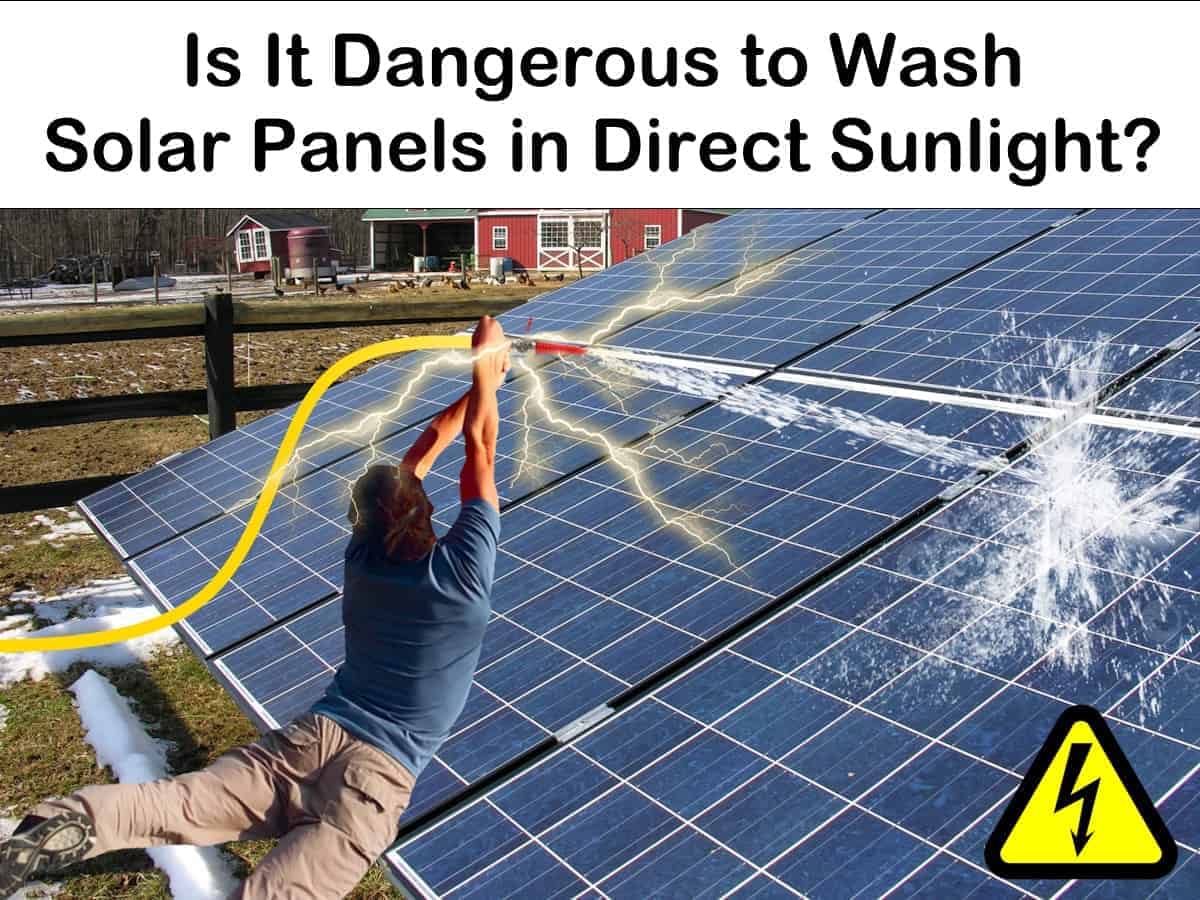
Electric Shock Hazard
As mentioned above, solar panels are both waterproof and weather-resistant. They are designed to withstand harsh environmental conditions, such as intense sunshine and heavy rainfall. Additionally, most solar panel systems are connected with proper grounding for electrical safety. So normally, washing well-maintained solar panels pose minimal risk of electric shock hazard.
However, wetting the panel increases the risk of arcing and electrical shock during operation (when it’s generating power) if there is damaged wiring or faulty insulation. The combination of water and live electricity could pose a risk of electric shock particularly if:
- The panel has damaged insulation.
- You’re using metal tools or standing on a wet roof.
- Water seeps into junction boxes or connectors.
A typical series-connected solar string operates at a voltage exceeding 400V, with a minimum current of around 10A. The surface temperature of the panels can reach up to 45°C even in winter, and up to 60°C or higher in summer while generating electricity. Spraying cold water directly onto these hot panels can cause thermal shock. As a result, it may lead to glass cracking which is potentially fatal and irreversible failure.
In addition, making a contact with a bare wire in a string of series connected solar panel (which produces up to 400V) may cause serious electric shock hazard and even electrocution.
The best approach is to ensure that the system is well-maintained, with a properly functioning grounding system. If recommended by the manufacturer, consider turning off the system before cleaning. Ideally, solar panels should be cleaned at dawn or dusk, when there is little to no power generation from the photovoltaic (PV) system.
Cracking the Panels
While solar panels are durable, they get very hot in sunshine often over 60°C (140°F). If cold water is suddenly splashed on hot glass, the rapid temperature change can cause thermal stress. The thermal shock potentially leads to micro-cracks or glass damage over time.
The best practice to avoid cracking panels, use lukewarm water or wash early in the morning or evening when panels are cooler.
Efficiency
Cleaning and removing the layer of dust and pollen from solar plates increases the efficiency. However, water evaporates quickly on hot surfaces, leaving behind mineral spots or streaks. While minor in number, it reduces the overall panel efficiency and may require proper cleaning again.
To prevent residue buildup, water spots and improve cleaning effectiveness, use deionized or softened water instead of cold and hard water.
Best Time and Practices for Cleaning Solar Panels:
- The ideal time to clean solar panels is early morning, late evening or overcast day. During these times, the panels are cooler and not generating peak power, so they don’t get excessively hot. As a result, the risk of thermal shock and water spots is significantly reduced. Other wise, using cold water on hot panels during strong sunlight can cause damage due to sudden and excessive temperature differences.
- While not always mandatory, it is recommended to turn off your solar panel system according to the manufacturer’s instructions before cleaning, to minimize the risk of electrical hazards.
- For small systems and DIY cleaning, use proper PPE, non-slip shoes, insulated gloves). Avoid pressure washers or abrasive materials. Instead, use warm and soft water or demineralized water with light spraying over panels.
- The main danger is falling from the roof while cleaning. Wet panels and rooftops can be slippery. Use safety harnesses or hire professionals if your panels are hard to access.
- Avoid abrasive materials that can scratch the panels. Instead, use soft brush, sponge, or microfiber cloth.
- A regular garden hose is usually sufficient. Avoid pressure washers, as they can damage the seals and internal components.
- For stubborn dirt, a small amount of mild dish soap diluted in water can be used. Rinse thoroughly to ensure no residue is left behind.
- Regular inspection is required. While cleaning, visually inspect your panels for any cracks, loose connections, or other damage.
- If you’re unsure, contact a professional solar panel cleaning service to ensure the job is done properly and for complete peace of mind.
Related Posts:
- Which Type of Solar Panel is Best: P Type or N Type, and Why?
- Can you Combine AC and DC Ground in a Solar Installation?
- Difference Between Monocrystalline, Polycrystalline, and Thin-Film Solar Panels
- How to Calculate the Right Size of Solar Charge Controller?
- Calculation & Design of Solar Photovoltaic Modules & Array
- Series, Parallel & Series-Parallel Connection of Solar Panels
- Basic Components Needed for Solar Panel System Installation
- How to Design and Install a Solar PV System?
- How Much Watts Solar Panel Do You Need for Home Appliances?
-
 New French Law Requires Solar Panels Over Parking Areas
-
 Germany’s 124 GW Solar Generation Now Exceeds Coal Power
-
 Arkansas School Uses Rooftop Solar to Raise Teacher Pay
-
 Germans Install Solar Panel Fences for Free Electricity
-
 Grounding and Methods of Earthing in PV Solar System
-
 Can you Combine AC and DC Ground in a Solar Installation?