Eric Trump-Backed Robot Company Plans to Develop Humanoid Robots for Military Operations
Foundation Future Industries, a U.S. robotics startup backed by Eric Trump, has announced a partnership with AMD to develop next-generation AI-powered humanoid robots for industrial and military applications. The company says its upcoming Phantom MK-2 robot will use AMD’s Ryzen AI Embedded X100 processors to deliver faster onboard AI and autonomous decision-making.
Led by CEO Sankaet Pathak, the company is targeting factories, warehouses, logistics centers, and defense operations. Foundation says its first-generation Phantom MK-1 robots helped manufacture more than 24,000 vehicles during 2025, demonstrating their ability to perform repetitive industrial tasks.
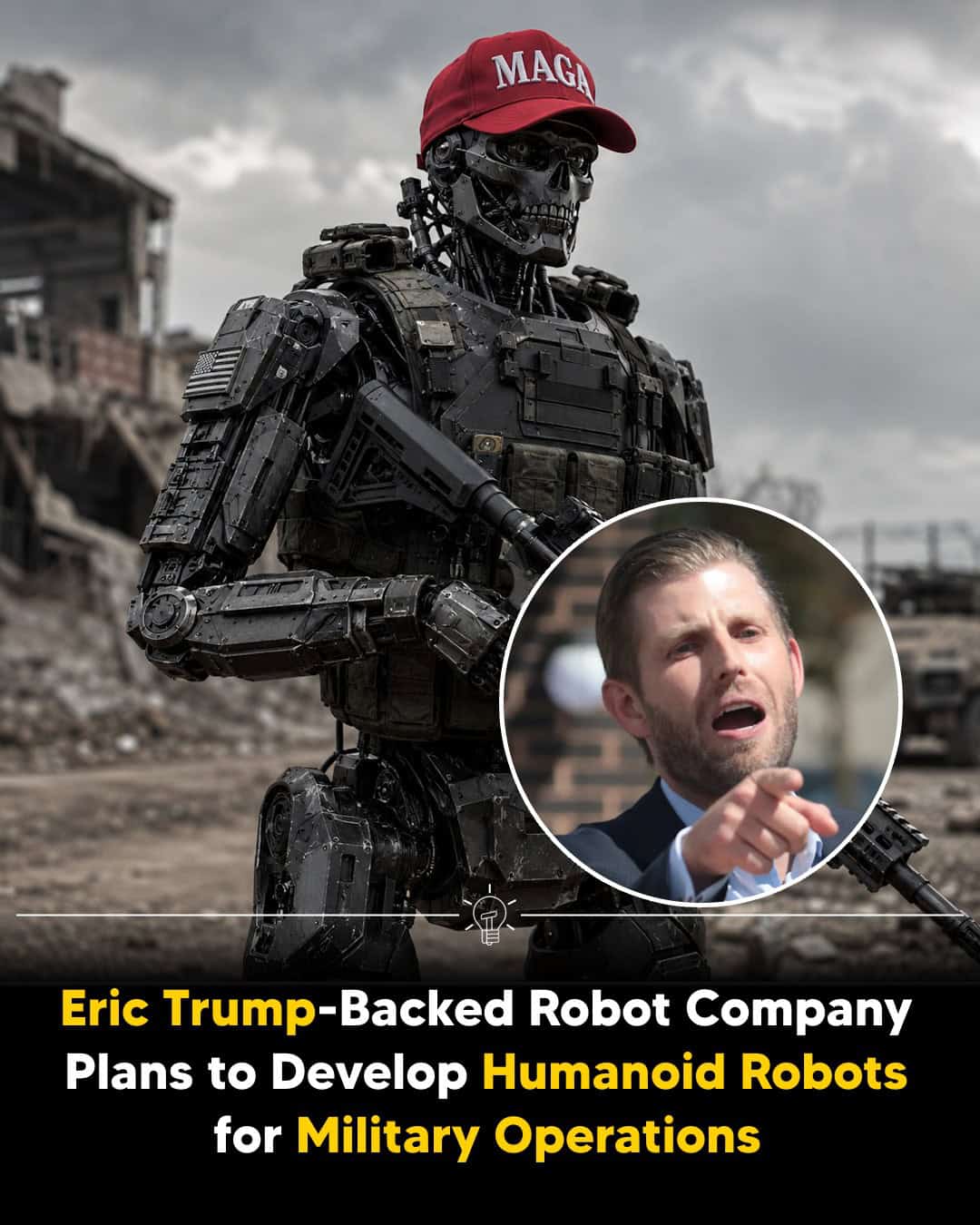
The Phantom MK-2 is being designed for demanding environments with features including 360-degree vision, IP67 water and dust resistance, and improved durability. The robot is intended to support both commercial customers and military users operating in harsh conditions.
For defense, the company says the humanoid robots are initially meant for non-combat roles such as carrying equipment, transporting supplies, reconnaissance, and assisting troops in hazardous areas. Prototype robots have also been evaluated in Ukraine to test logistics and battlefield support capabilities under real-world conditions.
Foundation has also confirmed it is exploring future “kinetic” capabilities for its robots. CEO Sankaet Pathak described the long-term goal as developing an “all-American robot supersoldier,” with additional details about the defense program expected in the coming months.
To expand production, the company plans to open a factory capable of building 5,000 humanoid robots annually, followed by a larger facility with a planned capacity of 50,000 robots per year. Industrial robots are expected to be leased to customers, while military versions will be supplied to government agencies.
Despite rapid progress, robotics experts say fully autonomous combat humanoids remain years away because of technical, operational, and ethical challenges. Even so, growing investment by the United States, China, and other countries suggests AI-powered humanoid robots could become an increasingly important part of future industrial and defense operations.
Related Posts:
- U.S. Blocks New Chinese Humanoid Robots Over Security Risks
- AI Robots Build China’s Great Wall Model Using 80,000 Blocks
- Robotic Snakes that Crawl Power Lines to Detect Faults
- Japan has Introduced a Giant Humanoid Robot for Railway Tasks
- The Mini LineFly Drone Robot Saves Birds from Colliding with Power Lines