Questions – Answers
Electrical and Electronics Engineering Interview Questions and Answers
-

Why is Copper Rod Used as Ground Rod in Grounding / Earthing System?
Why is Solid Copper Rod Preferred to use in Earthing / Grounding Instead of Iron, Steel etc.? While copper is a common choice for grounding rods, other materials like aluminum,…
Read More » -

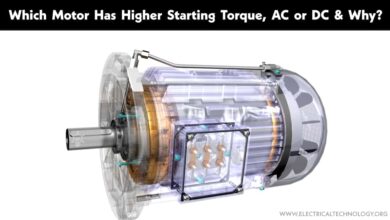
Why Do DC Motors Have Higher Starting Torque than AC Motors?
Why is the Starting Torque of a DC Motor Greater Than That of an AC Motor? DC (direct current) motors generally have higher starting torque compared to AC (alternating current)…
Read More » -
How Does Temperature Impact Sag in Overhead Lines?
Effects of Temperature on Sag in an Overhead Line The sag in an overhead line, which refers to the vertical distance between a conductor and the straight line between its…
Read More » -
Why Avoid Plugging Space Heaters into Power Strips or Extensions?
Why Space Heaters Should Not Be Plugged into Power Strips or Extension Cords? It is a cold weather reminder that you should NOT plug space heaters into power strips or…
Read More » -
Why is Power Transmitted at High Voltage Instead of High Current?
Why is High Voltage Used for Power Transmission and Not Lower Voltage? Transmitting electrical power at high voltage and low current is a more efficient and economical approach for long-distance…
Read More » -
What is the Power Angle in a Power Transmission Line?
What Is the Power Angle in Transmission Lines, and How Do You Calculate It? The power angle (denoted by δ) is the phase angle difference between two voltage levels in…
Read More » -
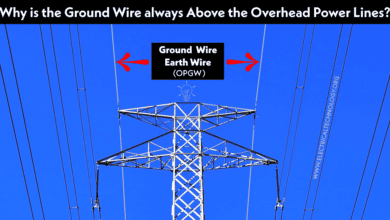
Why is the Ground Wire Always Positioned Above the Overhead Power Lines?
Why is the Ground Wire Above the Phase Lines in the Overhead Transmission Line? The ground wire (also known as earth wire or OPGW) above the phase lines in overhead…
Read More » -
What is the Minimum Ground Clearance for Overhead Power Line?
Minimum Ground Clearance Standard of Sag Due to safety reasons, an adequate distance is always maintained between the overhead conductor and the ground, depending on the transmission or distribution voltage.…
Read More » -
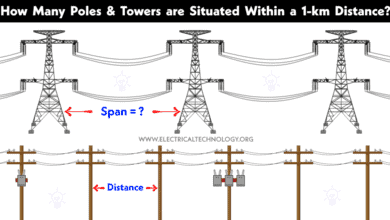
How Many Poles and Towers are Situated Within a 1-km Span?
How Many Utility Poles and Transmission Towers are Located Within a 1-kilometer Distance? The number of electricity poles for distribution and towers for power transmission in a 1-kilometer distance can…
Read More » -
Why are Overhead Power Transmission Lines Not Insulated?
Why Use Bare Conductors for Overhead Transmission Lines Instead of Insulated Conductors? You may have noticed that we use insulated cables for underground power transmission, as well as in industrial…
Read More »