U.S. Fire Department Are Testing Autonomous Drones that Can Fight Wildfires Before Firefighters Even Arrive
Fire departments across the United States are testing a new generation of autonomous firefighting drones designed to attack wildfires before they grow out of control. California startup Seneca recently demonstrated its AI-powered drone system during field trials with CAL FIRE and FireWERX, showing how rapid aerial response could strengthen early wildfire suppression efforts.
Unlike conventional drones used mainly for surveillance, Seneca’s aircraft actively fight fires. Each drone carries water and firefighting concentrate, while coordinated groups of four to six drones can release the equivalent of 500 to 1,000 gallons of firefighting foam over a fire, helping crews contain flames before they spread.
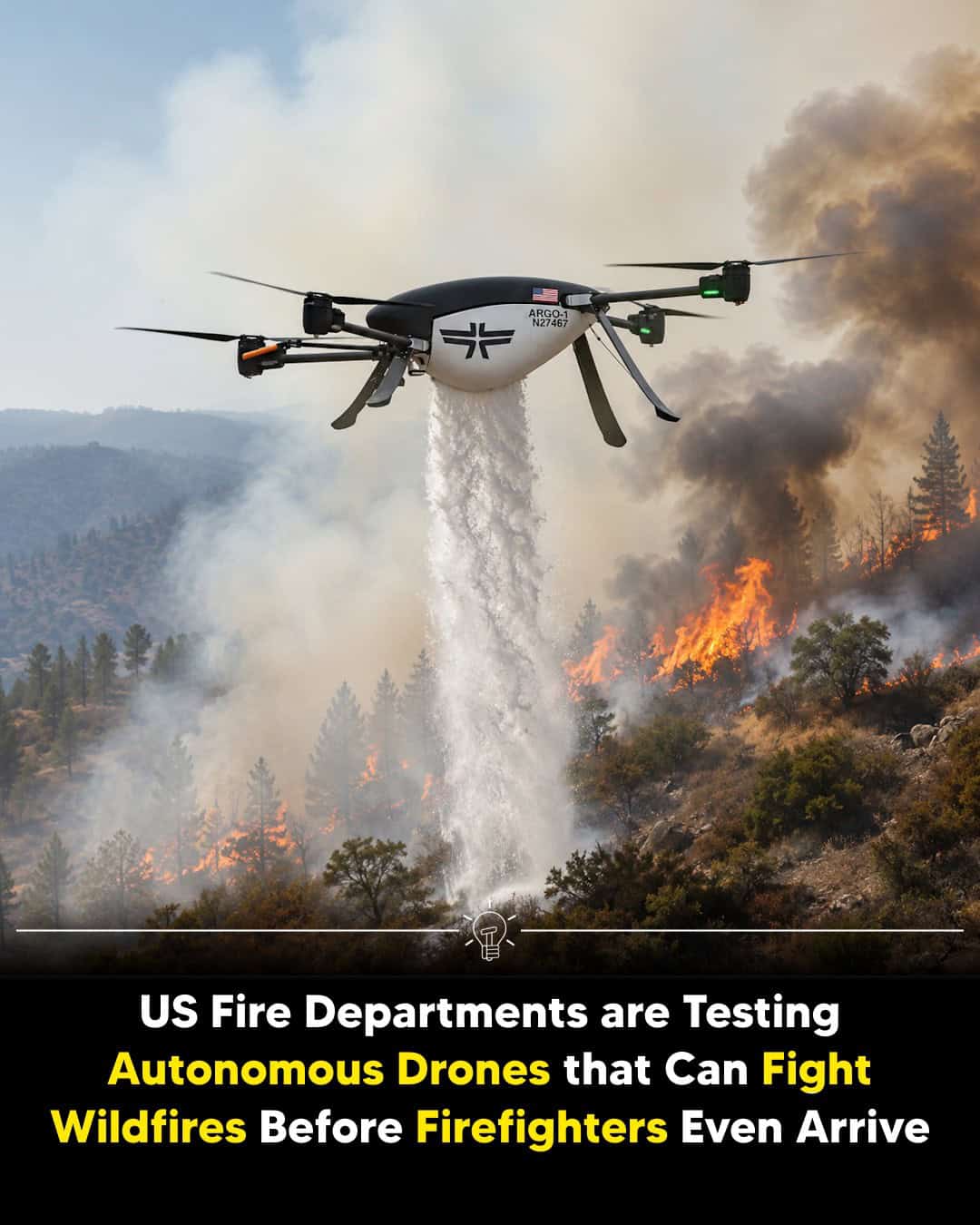
The drones fly autonomously using AI, infrared sensors, GPS navigation, and onboard computer vision to detect hotspots and precisely target flames. Human operators authorize missions and monitor operations, ensuring the systems remain under human supervision while reducing response times.
CAL FIRE conducted field evaluations of the technology on July 15 with its Fire Innovation Unit and nonprofit partner FireWERX. The tests examined how autonomous drone teams could work alongside firefighters by reaching remote or hazardous locations before ground crews or larger aircraft arrive.
Seneca says its systems are designed to be stationed in high-risk areas and launched within seconds after a fire is detected. The drones can be carried in pickup trucks or utility vehicles and do not require airfields or complex infrastructure, making them suitable for rapid deployment in wildfire-prone regions.
The company has attracted strong industry support, raising $60 million to accelerate development and commercialization. Earlier this year, the Aspen Fire Protection District became the first U.S. fire department to acquire Seneca’s autonomous aerial suppression system, marking an important step toward real-world adoption.
Although autonomous drones will not replace helicopters or ground firefighters, experts believe they can become an important first-response tool as wildfire seasons become longer and more severe. By attacking new ignitions within minutes, the technology could help protect forests, homes, critical infrastructure, and firefighters while reducing the damage caused by fast-moving wildfires.
Related Posts: