Toyota Confirms Hydrogen Hilux with 300kW Power for 2028
After Hybrid and EVs. Toyota Confirms Hydrogen-Powered Hilux with 300 kW Power and 250 miles (400+ km) Range
Toyota is expanding its Hilux pickup lineup with a hydrogen fuel-cell version planned for production in 2028. The upcoming model will join the company’s existing battery-electric, hybrid, and conventional powertrain options.
The hydrogen-powered Hilux is designed to combine electric driving with hydrogen fuel-cell technology. Toyota’s approach offers an alternative to conventional battery-electric pickups, particularly for drivers who need longer-distance capability and towing performance.
Toyota’s Hydrogen Fuel-Cell Hilux: What We Know
Toyota’s announcement is part of its broader multi-pathway strategy. Rather than relying on one powertrain, the company is developing battery-electric, hybrid, combustion-engine, and hydrogen fuel-cell vehicles for different markets and uses. The ninth-generation Hilux will include these alternatives as the lineup expands.
The hydrogen Hilux is scheduled to launch in 2028. Toyota has officially confirmed the fuel-cell model for Europe, while its global newsroom also identifies Europe and Oceania as planned launch regions. The company says the vehicle is intended to support the development of hydrogen infrastructure and related energy systems.
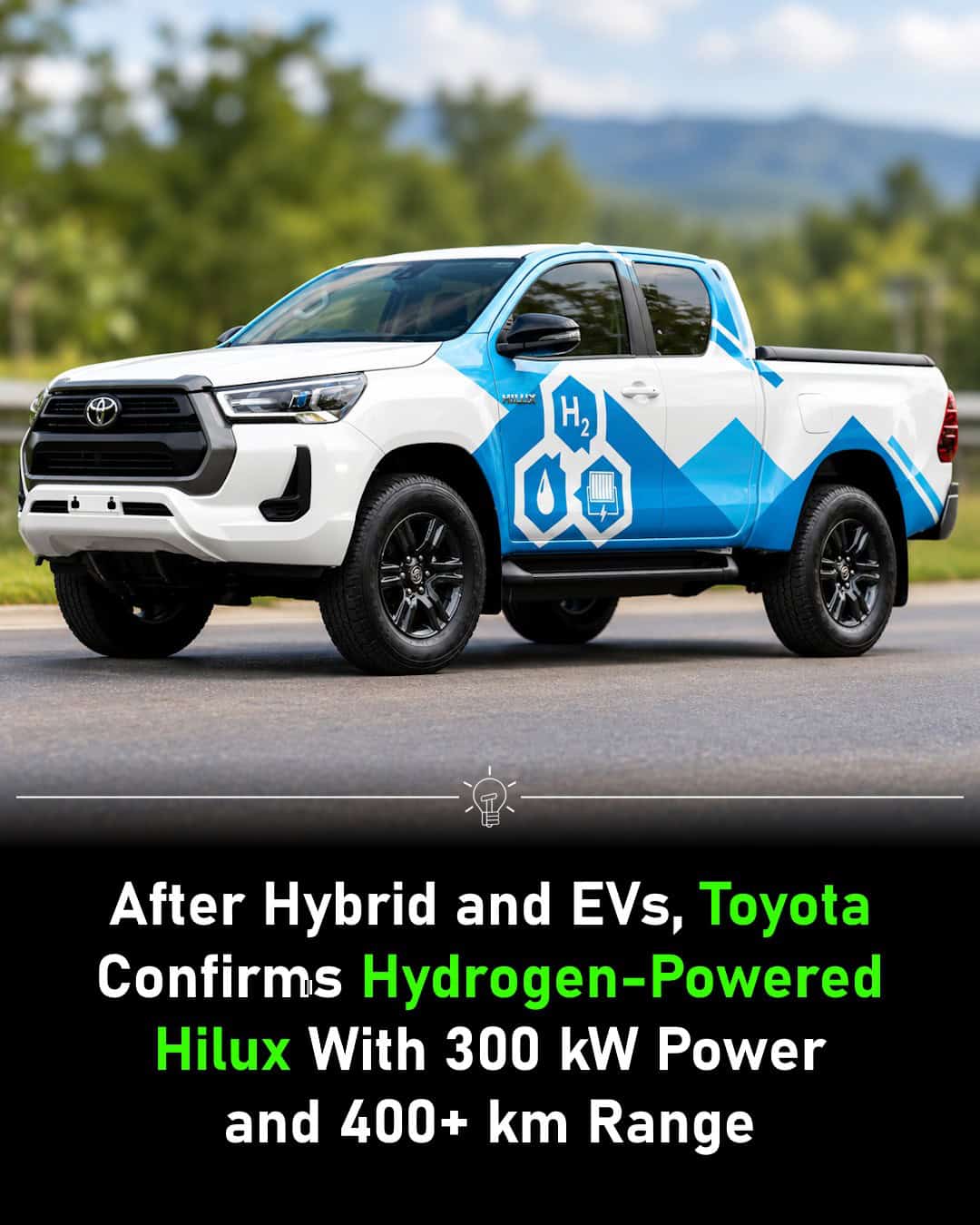
Recent reporting from WhichCar, published on September 18, 2026, adds more performance details. The hydrogen Hilux is targeting more than 400 kilometres of driving range and up to 2,500 kilograms of towing capacity. These are reported targets for the upcoming model, rather than final production specifications confirmed in Toyota’s original announcement.
The reported 300 kW power figure and Toyota’s third-generation fuel-cell system require a distinction. Toyota’s official Hilux announcements confirm a hydrogen fuel-cell version, but the cited launch releases do not provide a final 300 kW output specification. Therefore, the power figure should be treated as an unconfirmed detail unless supported by a newer technical document or direct Toyota statement.
Unlike a conventional battery-electric pickup, a fuel-cell electric vehicle produces electricity onboard. Hydrogen is supplied to the fuel-cell system, where it reacts with oxygen to generate electricity for the electric motor. Water and heat are the primary outputs at the vehicle, although the overall environmental benefit depends on how the hydrogen is produced.
Toyota’s existing battery-electric Hilux provides a useful comparison. Toyota Australia lists a 2,000 kg braked towing capacity for its battery electric vehicles (BEV) specifications, while WhichCar reports that the hydrogen version is targeting 2,500 kg. The hydrogen model’s reported range target is also higher than the approximately 257 km range cited for the European-specification BEV, but the two figures should not be treated as a direct real-world performance comparison until final testing is available.
Hydrogen infrastructure for will be an important factor in the vehicle’s rollout. Fuel-cell electric vehicles (FCEVs) require access to suitable hydrogen refueling stations, and availability differs considerably between regions. Toyota’s 2028 launch plan demonstrates its continued investment in hydrogen technology, but pricing, final specifications, production volumes, and market-specific availability remain subject to further announcements.
Related Posts:
- World’s First 932-Mile Hydrogen Car Refuels in Minutes
- Denmark Converts Gas Caverns Into Hydrogen Reserves for Winter
- BYD’s New Electric Truck for EU Beats Tesla Semi in Almost Every Metric
- Amazon Puts 1st 27 Mercedes Electric Trucks On German Roads
- Windrose Electric Trucks Enter Australia’s Long-Haul Freight
- BYD Launches Electric Truck to Rival Tesla Semi in Europe