US Gets 1st Balcony Solar Panel that Plugs into Wall Outlets
a f f link
America Launches its First UL-Listed 1,200W Plug-in Balcony Solar Panel that Connects to a Standard 120V Outlet
Hoymiles has introduced the HiFlow Pro, a plug-in solar microinverter designed for the U.S. residential market. The company describes it as the first U.S. plug-in microinverter compliant with the new UL 3700 safety framework. The device is designed to connect small solar installations to a standard 120V household outlet, potentially making solar easier to install in homes, apartments and other properties without conventional rooftop systems.
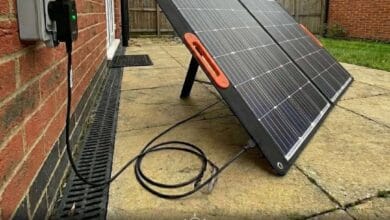
The HiFlow Pro converts DC electricity from solar panels into AC power that can be used by household appliances. A typical balcony-solar setup can use one or two panels with the microinverter, while multiple units can be connected in parallel. The combined system can reach up to 1,200 watts of AC output, depending on the applicable installation and regulatory requirements. The system is designed for small-scale generation rather than replacing a conventional high-capacity rooftop solar array.
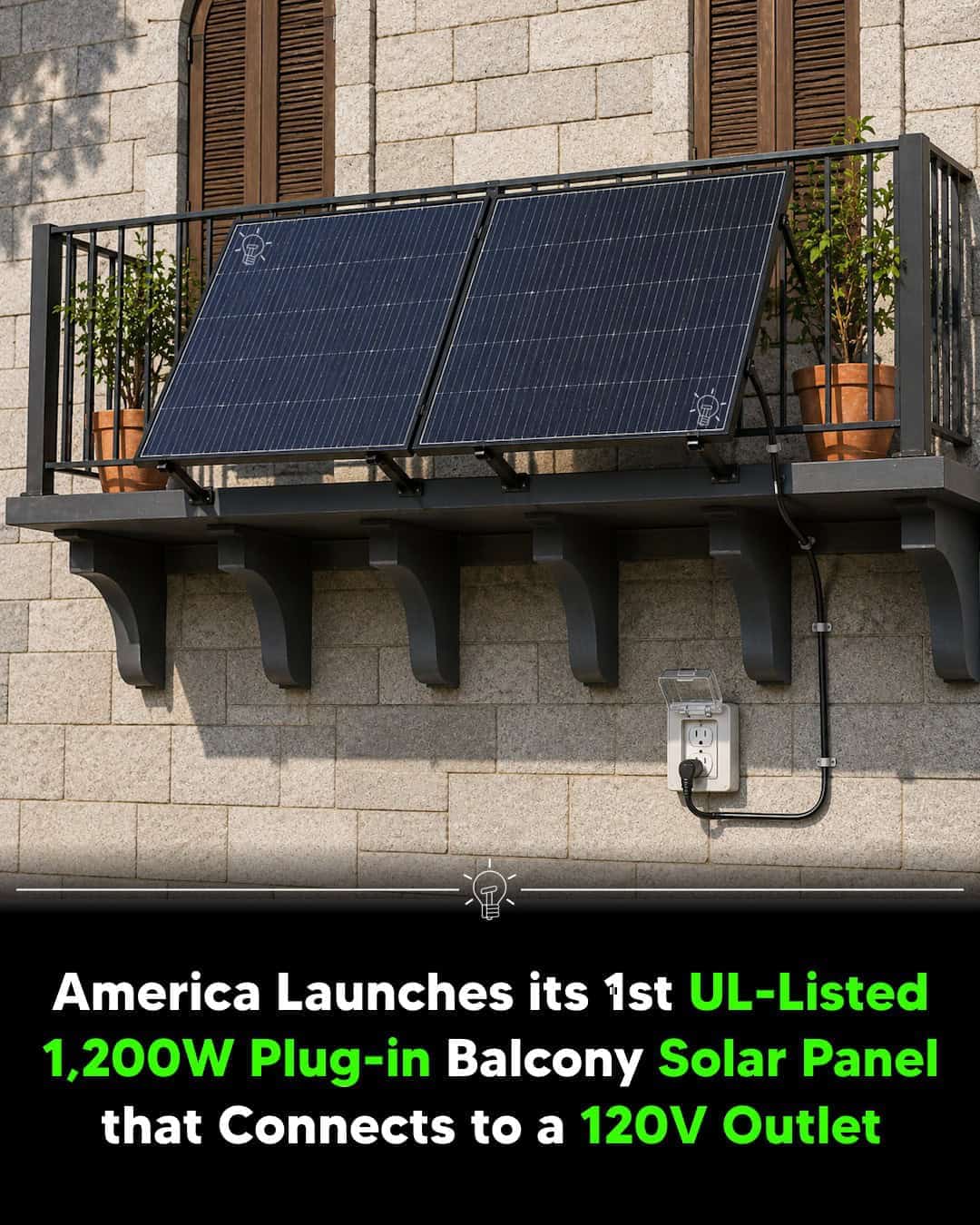
The major development is its connection to UL 3700, a new safety framework specifically addressing plug-in photovoltaic equipment and systems. UL published the Outline of Investigation in December 2025. It addresses issues including electrical connections, overcurrent protection, grounding, accessible energized parts and other hazards associated with plugging PV equipment into building circuits. The framework is intended to provide manufacturers, utilities and regulators with defined safety requirements for this emerging type of solar system.
Safety is particularly important because a plug-in solar system can send electricity into a home’s existing wiring. The HiFlow Pro includes anti-islanding protection designed to stop power production when the utility supply fails. This helps prevent the solar system from energizing a circuit during an outage, reducing the risk to utility workers repairing power lines. However, UL 3700 certification does not automatically make plug-in solar legal everywhere, because state and local electrical rules still determine where and how these systems can be installed.
Plug-in solar is gaining attention in the U.S. as states develop rules for smaller distributed-generation systems. By July 2026, eight states (Utah, Maine, Virginia, Maryland, Colorado, Connecticut, Vermont and New Hampshire) had enacted legislation supporting plug-in solar, according to Electrek. The technology could be particularly useful for renters, apartment residents and homeowners without suitable roofs. Similar balcony-solar systems are already widely used in parts of Europe, especially Germany.
Keep in mind that the HiFlow Pro is a microinverter, not a battery, so it does not store electricity for use after sunset or during an outage. Its purpose is to convert solar power and supply it directly to the household electrical system. The launch marks a step toward smaller plug-in solar systems in the U.S., but consumers still need to follow applicable state, local and utility requirements. UL 3700 provides a safety framework for the equipment; it does not by itself create nationwide permission to plug solar panels into household outlets.
Related Updates:
- California Approves Solar Panels that Plug Into Wall Outlets
- German Startup Turns Shop Awnings into Mini Solar Power Plants
- Arkansas School Uses Rooftop Solar to Raise Teacher Pay
- France Requires 40% of New Building Roofs for Solar Panels
- Dubai Airports to Install World’s Largest 60,000 MWh Solar Roof
- Germans Install Solar Panel Fences for Free Electricity
- MSU Develops Clear Solar Glass That Generates Electricity
- Colorful and Transparent Solar Panel to Replace Your Windows
- China’s Dual-Use Solar Farms & Photovoltaic Sheep Power Farms
- GoSun Electric Tractor Uses Solar Roof Canopy to Recharge