11 U.S. States Tighten Air Conditioner Regulations Due to Heat and Climate Concerns – More States Expected to Follow
Several U.S. states are strengthening air conditioner rules as extreme heat becomes more common. The changes focus on expanding access to cooling and reducing greenhouse gas emissions from new air conditioning systems. States are also encouraging the use of cleaner refrigerants in future equipment.
Washington recently expanded tenant protections through Senate Bill 6200. The law prevents landlords from banning portable, window, or saddle-style air conditioners if a building’s electrical system can safely support them. The measure aims to help renters stay safe during dangerous heat waves.
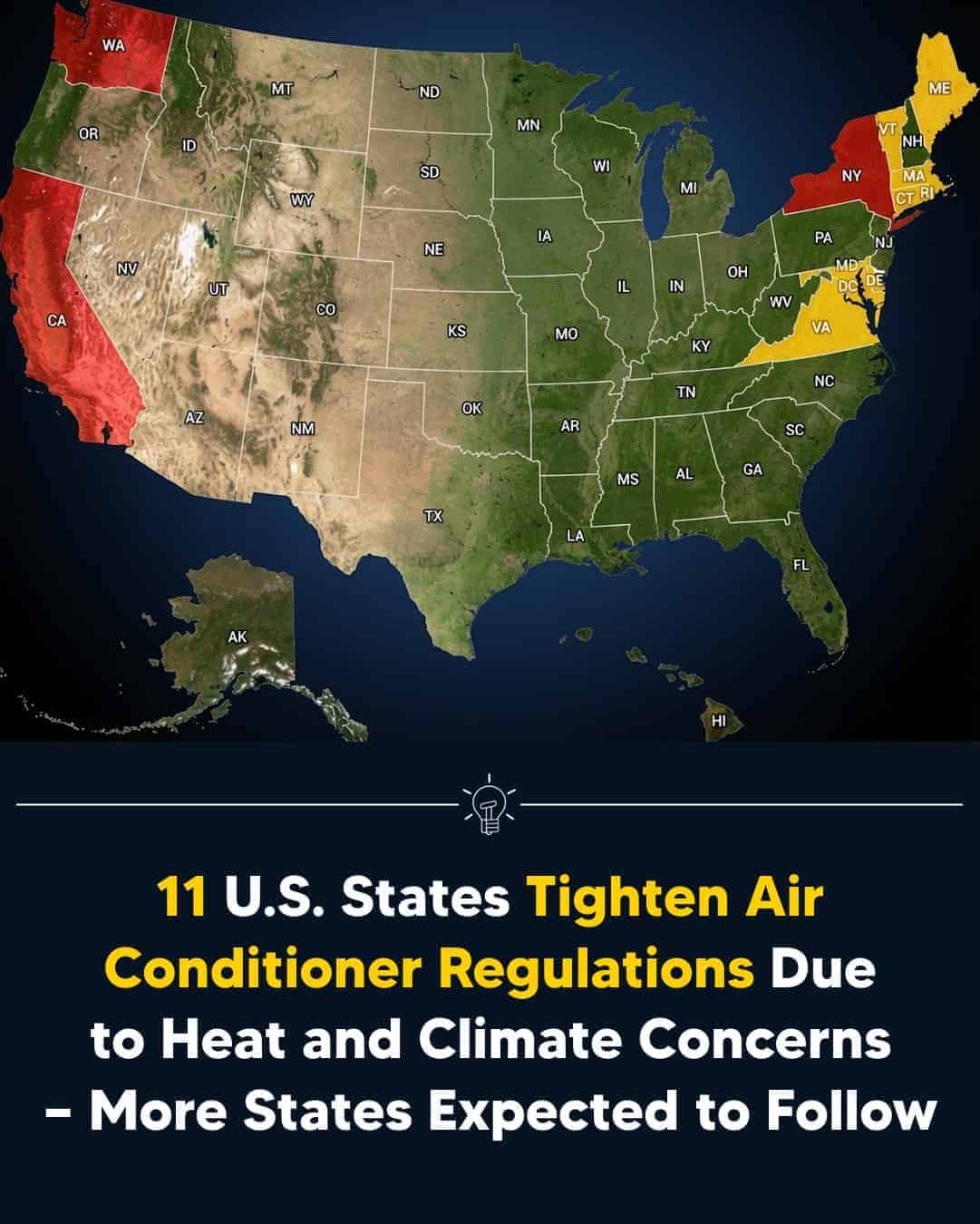
California and New York also have rules requiring landlords to maintain existing air conditioning systems in rental properties. While property owners are generally not required to install new air conditioners, they must keep installed systems in working condition under housing standards.
At the same time, California, New York, Washington, Delaware, Maine, Maryland, Massachusetts, Rhode Island, Vermont, Virginia, and several other states have adopted stricter refrigerant standards for newly manufactured air conditioners and heat pumps. These rules support the transition away from high-global-warming hydrofluorocarbons (HFCs) toward lower-impact alternatives.
The new regulations do not ban existing air conditioners. Current systems can still be used, serviced, and repaired. The updated refrigerant requirements mainly apply to new equipment entering the market, giving manufacturers time to adopt cleaner technologies.
Supporters say the new policies will reduce emissions, improve energy efficiency, and encourage the adoption of modern cooling technologies. They also believe stronger tenant protections will help prevent heat-related illnesses during increasingly severe summer temperatures.
Critics argue that newer systems using next-generation refrigerants may cost more to purchase and install. They warn that higher upfront costs could create challenges for renters, older people, and low-income households. Even so, many states see the changes as an important step toward cleaner and more resilient cooling systems.