Denmark Converts Gas Caverns Into Hydrogen Reserves for Winter
Denmark is Transforming North Sea Gas Storage Caverns into Hydrogen Reserves to Power the Country in Winter
Denmark is advancing a new approach to long-term renewable energy storage by converting underground natural gas caverns into hydrogen reserves. The project aims to store surplus wind and solar energy for use during winter, when renewable electricity generation is often lower and demand is higher. Hydrogen is expected to play a key role in balancing the country’s future energy system.
Unlike batteries, which typically store electricity for hours or days, underground hydrogen storage can preserve energy for months. Excess renewable electricity will power electrolysers that split water into hydrogen and oxygen. The hydrogen can then be stored until it is needed during long periods of cold and calm weather.
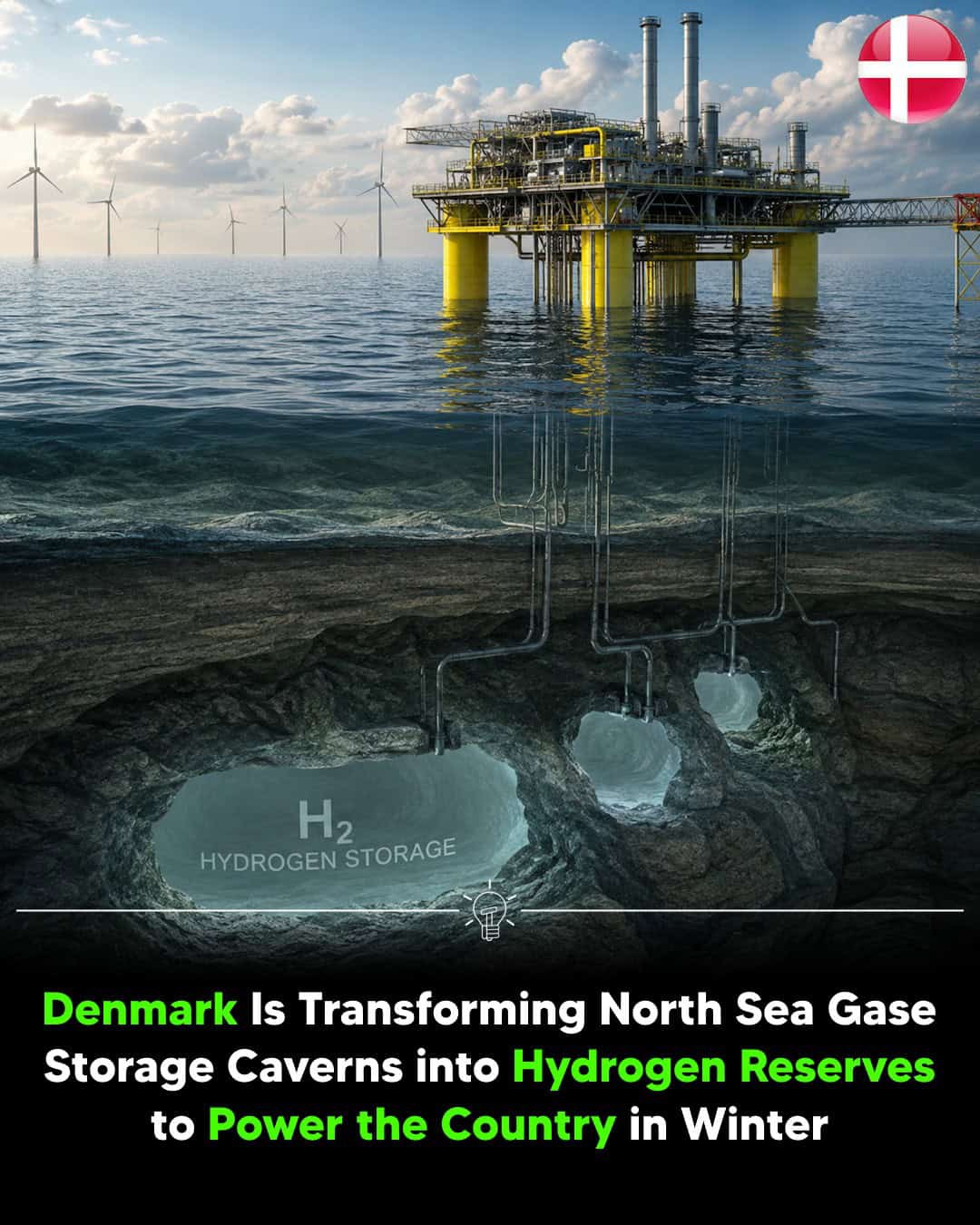
Instead of building entirely new storage sites, Denmark is repurposing its existing gas infrastructure. Gas Storage Denmark is evaluating the underground caverns at Lille Torup and Stenlille, which have long been used to store North Sea natural gas. Engineers are assessing how these facilities can safely store large volumes of hydrogen.
The underground caverns could eventually store hydrogen containing terawatt-hours of energy. That is far beyond the capacity of today’s grid-scale battery systems. Such storage could provide reliable backup electricity for weeks and help maintain a stable power supply throughout the winter.
The project supports Denmark’s national Power-to-X strategy. The country is investing billions of euros in hydrogen production, storage, pipelines, and clean fuels for industry, shipping, and aviation. New hydrogen projects and electrolyser facilities are also moving from planning into commercial operation.
Denmark’s growing hydrogen economy is attracting both public and private investment. Projects such as HYFLEX are developing flexible hydrogen storage and expanding electrolysis capacity to better integrate wind and solar power with the electricity grid. These efforts aim to lower renewable energy costs and improve grid reliability.
Although technical challenges remain, Denmark sees underground hydrogen storage as a major part of its clean energy future. If successful, the country could become a global model for seasonal renewable energy storage, helping other nations store excess clean electricity and reduce dependence on fossil fuels.
Sources:
- The International Energy Agency (IEA)
- AARHUS University – Denmark