UK Finally Makes Plug-In Solar Panels Legal at Home
After Decade, It’s Finally Legal in the UK to Plug Solar Panels Directly into a Wall Socket
After years of regulatory uncertainty, plug-in solar systems are now legally available in Great Britain. The change took effect on August 27, 2026, allowing compliant solar kits to connect directly to a suitable household socket without the conventional hardwired installation used for standard rooftop solar. The UK government says the move could make small-scale solar more accessible to households, including renters, apartment residents and homes without suitable roofs.
The systems combine solar panels with a microinverter. The panels produce DC electricity, while the microinverter converts it into AC power that can be used by appliances in the home. The new rules as per specifications limit the microinverter to 800 VA, while the connected solar panels can have up to 2,000 W of DC capacity. This allows a relatively small system to generate electricity locally while keeping the AC output within the specified limit.
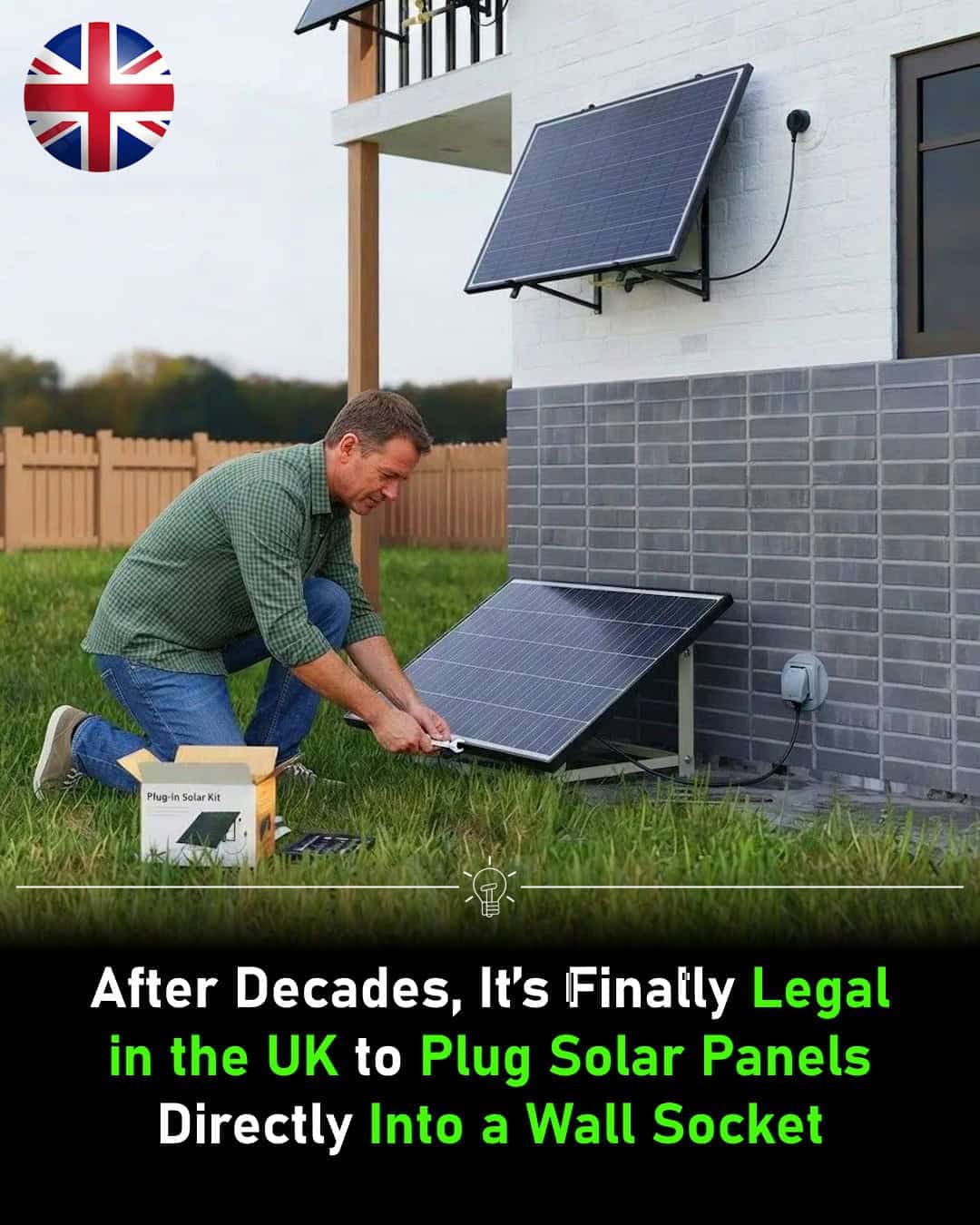
The system is intended to reduce the amount of electricity a household buys from the grid. The UK government estimates that an 800W plug-in solar system could supply up to 20% of an average home’s electricity use and potentially save up to £110 per year. Actual savings will depend on sunlight, panel orientation, shading, electricity prices and how much solar electricity is consumed while it is being generated.
Safety requirements still apply. Compliant systems must meet specified electrical standards, including requirements associated with BS 1363, BS 7671 and the G98 connection standard for small generators. The current product specification also excludes plug-in battery systems. Users must notify their local electricity distribution network operator after installation so the small generator is recorded on the network.
The technology could be particularly useful for people who cannot install conventional rooftop solar. Renters may be able to use the systems with landlord permission, while apartment residents could potentially install panels on suitable balconies or other permitted locations. However, planning rules, lease conditions, landlord restrictions and listed-building requirements can still apply. The London Fire Brigade has also urged consumers to use compliant equipment from trusted manufacturers because poor-quality products can create electrical and fire risks.
The new rules do not make plug-in solar a replacement for a conventional rooftop PV system. An 800W AC inverter is much smaller than a typical residential solar installation, and actual generation varies with weather and location. Instead, the policy creates a simpler route for households to generate some of their own electricity. From August 27, 2026, compliant plug-in solar systems can legally connect to suitable sockets across Great Britain, expanding access to small-scale solar without requiring a full rooftop installation.
Related Posts:
- Germans Install Solar Panel Fences for Free Electricity
- German Startup Turns Shop Awnings into Mini Solar Power Plants
- China Tests Underwater Solar Power Plant at 33 Ft Below Sea
- MSU Develops Clear Solar Glass That Generates Electricity
- Colorful and Transparent Solar Panel to Replace Your Windows
- New French Law Requires Solar Panels Over Parking Areas