Europe Tests New Solid-State Air-Conditioners that Don’t Need Any Refrigerants
Europe is developing a new generation of air conditioners that work without traditional refrigerant gases. Instead, they use solid-state materials that heat up and cool down when stretched, compressed, or exposed to magnetic or electric fields. The goal is to reduce emissions and improve energy efficiency.
The research comes as Europe faces longer and more intense heat waves. Demand for air conditioning is rising quickly. At the same time, the European Union is phasing out many fluorinated refrigerants because they have a high global warming potential if they leak into the atmosphere.
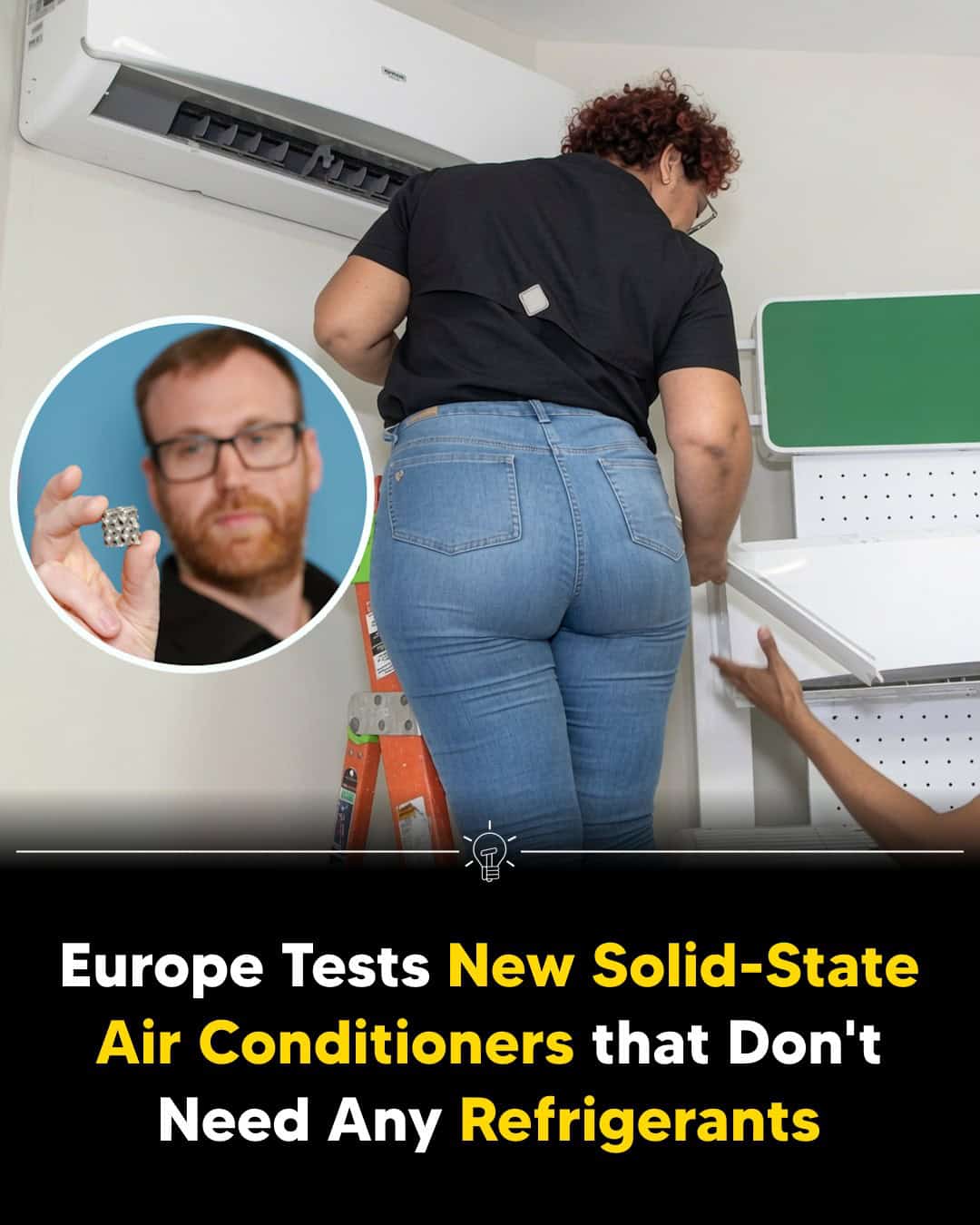
One of the leading technologies is elastocaloric cooling. It uses nickel-titanium (Nitinol) shape-memory alloys that absorb and release heat when repeatedly stretched and released. The EU-funded SMACool project is developing a residential air conditioner based on this technology. Researchers expect it to use at least 20% less energy than conventional systems, with the potential for even greater savings.
Other European companies are testing different solid-state cooling methods. These include semiconductor-based systems, magnetic cooling, and pressure-sensitive crystal technologies. Some prototypes use only water to transfer heat, eliminating the need for harmful refrigerant gases altogether.
Researchers say these systems could be quieter and simpler than today’s compressor-based air conditioners. They may also require less maintenance because they have fewer moving parts. Several prototypes are now being tested in laboratories, homes, vehicles, and commercial buildings across Europe.
Although the technology is promising, commercial deployment will take time. Engineers must improve durability, reduce manufacturing costs, and scale up production. Continued investment from governments and industry will be essential before refrigerant-free cooling becomes widely available.
Experts believe solid-state cooling could transform the future of air conditioning. If successful, it would reduce electricity use, eliminate high-impact refrigerants, and help lower greenhouse gas emissions. As global demand for cooling grows, Europe is positioning itself at the forefront of this next-generation technology.