California Approves Solar Panels that Plug Into Wall Outlets
No Rooftop, No Problem: California’s New Bill Allows You To Plug Solar Panels Directly into Wall Outlets
California lawmakers have passed Senate Bill 868, known as the Plug and Play Solar Act, which would make small plug-in solar systems easier to install and use. The legislation was approved by the California Legislature in August 2026 and was presented to Governor Gavin Newsom on August 31. It is not yet law and is awaiting the governor’s action. If enacted, the new rules would take effect on January 1, 2027.
The SB 868 bill covers portable solar generation devices that can be connected to a building through a standard electrical receptacle. The systems can combine a few photovoltaic panels with an inverter and feed electricity into a home or apartment through a 120V outlet.
The bill sets a maximum combined AC output of 1,200 watts per dwelling. The electricity must be intended to offset the customer’s onsite consumption rather than operate as a conventional utility-scale generator.
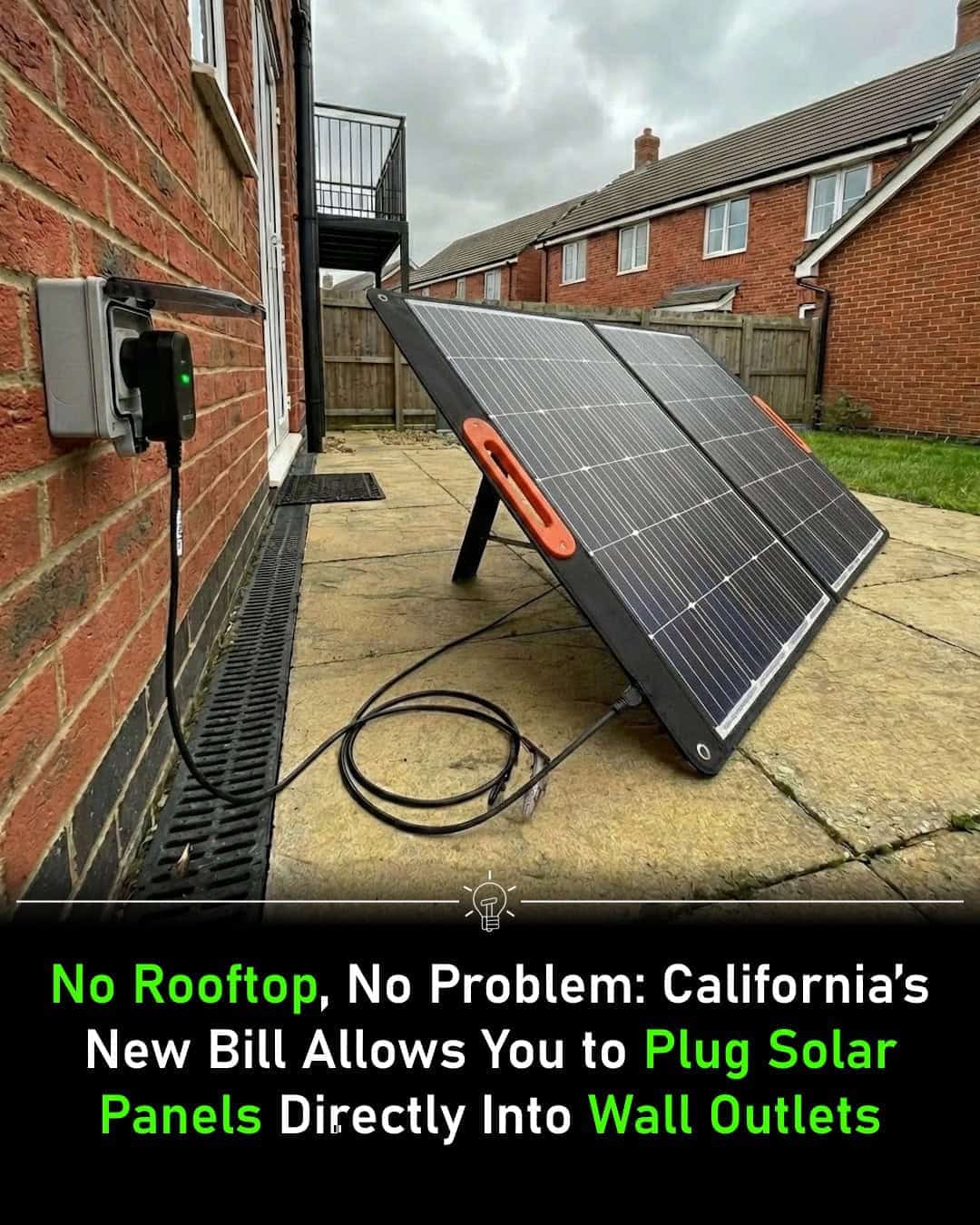
The proposed system could remove much of the interconnection process normally associated with residential solar. Until January 1, 2030, qualifying plug-in solar devices would be exempt from state and utility interconnection requirements.
Utilities would generally not be allowed to require prior approval, interconnection agreements or fees for these devices. However, a utility could require customers to submit basic information, such as the installation address and system size, through a simple registration process.
Safety requirements remain a central part of the bill. A qualifying system would have to comply with the latest National Electrical Code (NEC) and California Electrical Code requirements. It would also need certification from Underwriters Laboratories (UL) or an equivalent nationally recognized testing laboratory.
In addition, the system must include certified protection that isolates it from the building’s electrical system during a power outage. This anti-islanding feature is intended to prevent the equipment from sending electricity back onto the grid while utility workers may be repairing a downed line.
The proposed rules could open plug-in solar to people who often face barriers to conventional rooftop installations. Renters and apartment residents could potentially use portable panels on balconies, patios or other suitable locations, while homeowners with unsuitable roofs could have another option. Current systems can also be considerably cheaper than full rooftop installations.
However, the legislation does not mean that every existing plug-in solar product would automatically become legal. Equipment would have to meet the specified safety, certification and electrical requirements.
California’s legislation follows growing interest in balcony and plug-in solar systems, which are already used in several other markets. SB 868 originally passed the state Senate by a 35-1 vote before advancing through the Assembly. The final legislation was enrolled and sent to the governor in August. If signed, California would establish a specific statewide framework for small portable solar generation, potentially allowing more households to produce some electricity without the cost and complexity of a conventional rooftop PV installation.
Related Updates:
- German Startup Turns Shop Awnings into Mini Solar Power Plants
- Arkansas School Uses Rooftop Solar to Raise Teacher Pay
- France Requires 40% of New Building Roofs for Solar Panels
- Dubai Airports to Install World’s Largest 60,000 MWh Solar Roof
- Germans Install Solar Panel Fences for Free Electricity
- MSU Develops Clear Solar Glass That Generates Electricity
- Colorful and Transparent Solar Panel to Replace Your Windows
- China’s Dual-Use Solar Farms & Photovoltaic Sheep Power Farms
- GoSun Electric Tractor Uses Solar Roof Canopy to Recharge