Questions – Answers
Electrical and Electronics Engineering Interview Questions and Answers
-
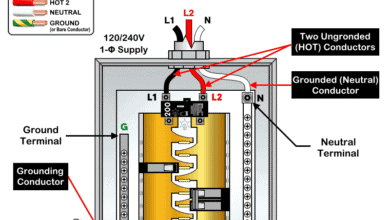
Difference Between Grounding, Grounded and Ungrounded Conductors
Difference Between Grounding (Ground), Grounded (Neutral) and Ungrounded (Phase/Hot/Line) Conductors Grounding and grounding conductors are related terms commonly used in the National Electrical Code (NEC), technical guides, and user manuals.…
Read More » -

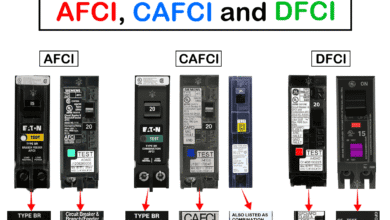
Difference Between AFCI, CAFCI, DFCI and GFCI?
What is the Difference Between AFCI, CAFCI, DFCI and GFCI AFCI (Arc-Fault Circuit Interrupter), CAFCI (Combination Arc-Fault Circuit Interrupter), and DFCI (Dual-Function Circuit Interrupter) are protective devices and circuit breakers…
Read More » -
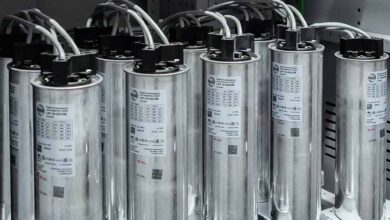
Why is a Capacitor Bank Rated in kVAR, Not in Farad?
Why is the Rating of a Capacitor Bank Expressed in kVAR Instead of Watt or Farad We know that a capacitor is rated in Farads because its capacitance value indicates…
Read More » -
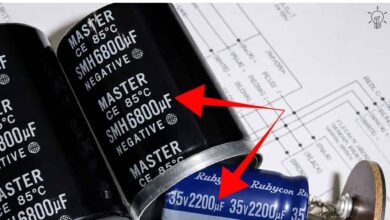
Why is the Rating of a Capacitor Expressed in Farad?
Why is a Capacitor Rated in Farads rather than W, VA or Ah A capacitor stores electrical energy in the form of an electric field between its plates. The value…
Read More » -
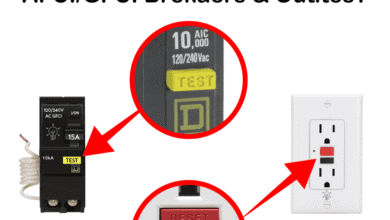
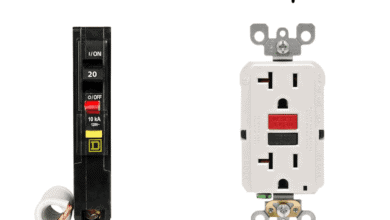
What Happens When You Press TEST and RESET on a GFCI
What Do the TEST and RESET Buttons Mean on GFCI Breakers and Outlets? Why Do Some Breakers in My Panel Have a TEST/RESET Buttons? Not all breakers look the same…
Read More » -
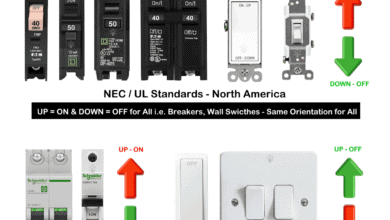
Why are the Breakers Switched Opposite to Light Switches?
Why Does the Circuit Breaker Turn ON in the Opposite Direction Compared to General Wall Light Switches? In residential 120/240V electrical panels following NEC/UL standards (common in North America), the…
Read More » -
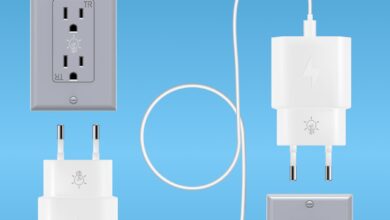
What Would Happen If You Plugged A Charger into Another?
What Happens if You Plug Two USB Chargers into Each Other? Although it is not recommended, it is technically possible to connect two USB chargers (whether Type-A or Type-C) to…
Read More » -
Should GFCI Protection Be in the Main Panel or Receptacle?
Is It Better to Install GFCI Protection in the Electrical Panel or at the Outlet? Ground Fault Circuit Interrupters (GFCIs) are designed to detect ground faults and protect against electric…
Read More » -
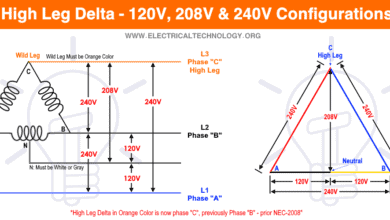
Why Does the High Leg Measure 208V Instead of 120V?
Why Does the High Leg Measure 208V to Neutral While Normal Hot-to-Neutral (L–N) Measures 120V? In North America, 208V is commonly available in two configurations of single-phase and three-phase supply…
Read More » -
Why are 1-Phase Motors Not Self-Starting Like 3-Phase Motors?
Why a Single-Phase Induction Motor is Not Self-Starting, While a Three-Phase Induction Motor Can Start on Its Own? Single-phase induction motors are not self-starting because they produce an evolving magnetic…
Read More »