Japanese Wearable Device Generates Electricity from Sweat
Japanese Engineers Develop Sweat-Powered Wearable That Generates Electricity Without Batteries
Engineers at Tokyo University of Science have developed a thin wearable patch that generates electricity directly from human sweat. It captures chemical compounds, especially lactate, released during sweating and converts them into power.
This lets your body act as the energy source, offering an alternative to traditional batteries in health sensors. The more you move and sweat, the more energy it produces, making it especially useful for monitoring during exercise.
The research was led by Associate Professor Isao Shitanda from the Department of Pure and Applied Chemistry. The study was published in the peer-reviewed journal ACS Applied Engineering Materials on February 6, 2026.
Researchers say the technology could help address one of the biggest limitations in wearable electronics: the need for bulky batteries that require frequent charging and replacement.
How the Device Works?
Human sweat contains several chemical compounds, including electrolytes and metabolic byproducts such as lactate. The newly developed device uses an enzymatic biofuel cell (EBFC) to convert the chemical energy stored in lactate into electrical energy.
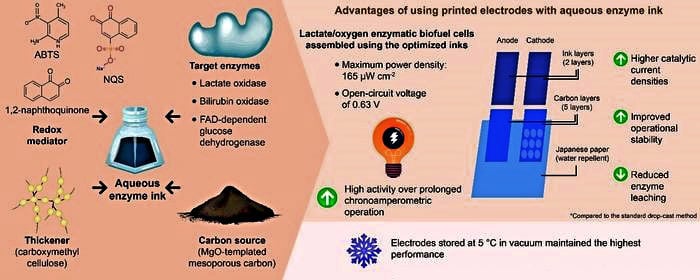
When sweat comes into contact with the device, enzymes embedded in the biofuel cell trigger a biochemical reaction. Lactate molecules are oxidized at the anode, releasing electrons. These electrons then travel through an external circuit, producing an electrical current.
At the cathode, oxygen from the surrounding air reacts with the electrons to complete the electrochemical process. This continuous electron flow generates usable electricity without requiring any external power source.
Because the device relies on chemicals naturally produced by the body, electricity generation occurs passively during everyday activities such as walking, exercising, or performing routine tasks.
A big breakthrough behind this wearable device is a specially designed water-based enzyme ink. This unique ink lets engineers print the entire biofuel cell in one simple pass, making manufacturing much faster and easier.
Normally, creating enzymatic biofuel cells is a multi-step headache. Engineers have to print conductive layers, coat each electrode with enzymes, and let every layer dry before moving on. This can lead to uneven enzyme distribution and inconsistent performance.
The new enzyme ink changes all that by combining everything into one printable mixture, including:
- Porous carbon particles that provide a conductive scaffold
- Enzymes that drive the chemical reactions
- Water-based binders and stabilizers to keep the enzymes active
With this ink, both the anode and cathode can be printed at the same time onto a thin paper substrate. This ensures a more even enzyme spread and reduces variation between devices—perfect for scaling up production.
The team also tackled one of the trickiest parts: oxygen-processing enzymes at the cathode. These enzymes are fragile and often lose their activity during manufacturing. By embedding them directly into the ink, the researchers boosted stability and reliability.
Lab Tests Show Promising Results
In lab tests, the printed biofuel cell showed promising electrical performance. It reached a peak power density of about 165 microwatts per square centimeter (µW/cm²) and produced an open-circuit voltage of 0.63 volts.
While this power is modest compared with traditional batteries, it’s enough to run low-power wearable biosensors. These sensors can track biochemical signals from the body and send the data wirelessly using energy-efficient systems like Bluetooth Low Energy.
Importantly, the biofuel cell works well under realistic conditions. Tests confirmed it operates effectively with the range of lactate levels normally found in human sweat during exercise, from 1 to 25 millimoles per liter. This alignment with natural sweat chemistry is key for making the device practical for everyday wearable use.
Potential Applications in Health Monitoring
Sweat-powered biofuel cells could enable a new generation of self-powered wearable sensors designed to monitor health and physical performance.
Wearable devices currently rely on compact batteries, which add thickness and weight to otherwise flexible electronics. Batteries also require regular charging and contribute to electronic waste when disposable devices are discarded.
By using energy directly from the body, sweat-powered devices could help eliminate the need for these batteries in certain applications.
Potential uses include:
- Continuous monitoring of metabolic biomarkers during exercise
- Real-time tracking of lactate levels for athletes and sports scientists
- Remote patient monitoring in healthcare settings
- Disposable medical patches that operate without battery replacement
Because lactate levels increase during intense physical activity, the device may even produce more power during periods when monitoring is most important.
Improving Stability and Long-Term Performance
Despite the promising results, researchers note that additional work is needed before sweat-powered biofuel cells can be widely used in commercial devices.
One challenge involves maintaining enzyme activity over extended periods. Enzymes can gradually lose effectiveness due to temperature changes, exposure to oxygen, and environmental conditions.
The team found that storing the printed devices at 5 degrees Celsius (41 degrees Fahrenheit) under vacuum conditions helped preserve enzyme performance for longer periods. Future research will focus on improving storage stability and operational lifespan.
Scientists also aim to use the biofuel cells with energy storage components and wearable sensor systems to create fully autonomous monitoring devices.
Frequently Asked Questions (FAQ)
What is the sweat-powered wearable device?
the sweat-powered wearable is a thin patch that generates electricity using chemicals in human sweat, such as lactate, removing the need for traditional batteries.
How much power can it produce?
The device developed by researchers at Tokyo University of Science can generate up to 1,065 microwatts per square inch (about 165 µW/cm²) at peak power, with an open-circuit voltage of 0.63 volts. This is enough to run small, low-power wearable biosensors.
How does the device work?
It uses an enzymatic biofuel cell where enzymes break down lactate in sweat, releasing electrons that flow through a circuit to produce electricity.
Can it replace batteries in wearable devices?
Yes, for low-power health sensors, this technology can replace coin-cell batteries, making devices thinner, lighter, and more environmentally friendly.
What are the main applications of this technology?
It can be used for real-time health monitoring, fitness tracking, and remote patient care without the need for charging or battery replacement.