Robotic Snakes that Crawl Power Lines to Detect Faults
China Deploys Robotic Snakes that Crawl Power Lines to Inspect, Detect and Prevent Faults in Power System
Electric utilities around the world are increasingly using robotics to improve the reliability of power networks. One of the latest innovations is the deployment of snake-like inspection robots that can crawl directly on power lines and identify problems before they cause outages.
A similar system in China has been successfully tested by the GDPSB on energized power lines, including in sensitive areas where access for flying-objects is restricted.
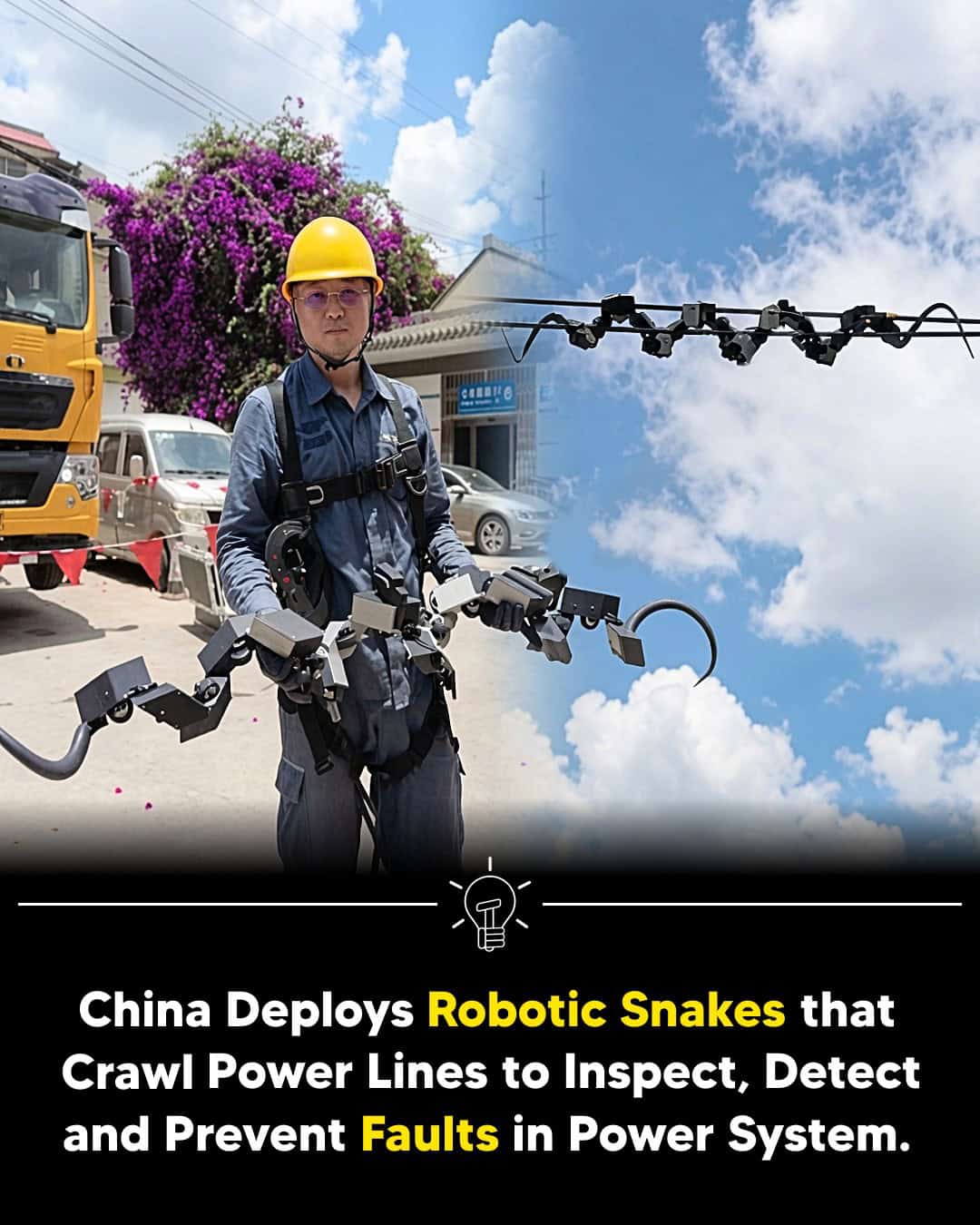
The snake-shaped robots are developed by the Guandu District Power Supply Bureau. According to The South China Morning Post (SCMP), these robotic “guardians” have been deployed in Kunming, the capital of Yunnan Province in southern China.
The self-powered robotic snake successfully traveled approximately 81 miles (130 km) along high-voltage live power lines to enhance grid monitoring and maintenance.
This autonomous robot slithers along cables and provides 24/7 uninterrupted inspection and protection of overhead power lines without interruption.
A New Approach to Power Line Inspection
Traditionally, power lines are inspected by utility crews, helicopters, drones, or ground-based surveys. While these methods are effective, they can be expensive, time-consuming, hazardous (personnel safety) and sometimes limited by weather conditions or restricted airspace.
The new robotic snakes offer a different solution. Instead of flying above the lines, they travel directly along the conductors. Their flexible, segmented bodies allow them to move over long distances and navigate around obstacles such as insulators, spacers, clamps, and other line hardware.
This advanced alternative system is three times more efficient than traditional manual approaches of power line inspection.
How the Robotic Snakes Work
The robots are equipped with cameras, thermal imaging sensors, and intelligent monitoring devices. As they move along the power lines, they continuously inspect the electrical infrastructure for signs of damage or deterioration.
These systems can detect:
- Damaged conductors
- Loose or worn components
- Corrosion
- Insulation defects
- Abnormal temperatures and overheating
- Potential failure points
The collected data is transmitted to utility operators for analysis and maintenance planning.
Why They Are Better Than Drones in Some Situations
Drones have become a common tool for power line inspection. However, they have several limitations.
Drone operations can be restricted near airports, military installations, no-fly zones and other sensitive locations. Strong wind and battery life also limits flight duration. In addition, strong electromagnetic fields around high-voltage equipment can interfere with drone operation and image quality.
Robotic snakes avoid many of these challenges because they operate directly on the power lines. One of the advantages of the snake-like robot is that it can draw non-contact electrical power directly from the conductors it is inspecting. This feature enables extended and continuous operation for long distance without the need for frequent battery replacement or recharging.
This unique design enables the snake robots to inspect power lines from a position that is much closer to the equipment than drones or ground-based observers.
Preventing Grid Failures Before They Happen
One of the most important benefits of these robotic inspectors is predictive maintenance. Instead of waiting for equipment to fail, utilities can identify developing problems at an early stage.
A small defect in a conductor or connector may not immediately interrupt service. However, if left unattended, it can lead to overheating, equipment damage, or widespread outages. Early detection allows maintenance crews to repair the problem before customers experience a power interruption.
This proactive approach improves system reliability and reduces maintenance costs over the long term.
Improving Worker Safety
Inspecting energized power lines can be dangerous. Power line inspections often require lineman to climb poles, towers, or access difficult terrain to work at great heights or near energized equipment. Robotic inspectors reduce the need for personnel to enter hazardous locations.
By performing routine inspections autonomously, the robotic grid guardians help utilities gather more data while minimizing the risk and exposure of maintenance crews to potentially dangerous environments.
The Future of Smart Grid Maintenance
Robotic snakes are part of a broader trend toward automated grid management. Utilities are increasingly combining robots, drones, cameras, artificial intelligence, and advanced sensors to create smarter and more resilient electrical networks.
As these technologies continue to evolve, power companies will be able to detect faults faster, schedule maintenance more efficiently, and reduce the frequency of unexpected outages. In short, these innovative machines provide a safer, more reliable, and more efficient electrical grid capable of meeting the growing demands of modern society.
Related Innovative Inventions around the world:
- The Mini LineFly Drone Robot Saves Birds from Colliding with Power Lines
- Finland Successfully Tests Wireless Electricity Transmission
- Japan has Introduced a Giant Humanoid Robot for Railway Tasks
- Poland Builds Solar-Powered Bike Lane That Glows Blue in the Dark
- Japan Uses Electrically Heated Sidewalks to Prevent Snow Accumulation on Roadways
- Swedish Scientists Develop Liquid that Stores Solar Energy for 20 Years
- BMW Installs UK’s First Motionless Wind Energy System at Oxford Plant
- US Firm Unveils Small Nuclear Reactor to Power 300K Homes
- Norway Sets Up World’s First Wireless EV Charging Road
- Japan Introduces Magnetic Levitation Car Technology – The End of Engines and Batteries
- China’s Betavolt Developed a Nuclear Battery with a 50-Year Lifespan
- Qurmit – 95% Recyclable Fireproof Battery with 20 Years of Lifespan
- Colorful and Transparent Solar Panel to Replace Your Windows