Why is Alternating Current (AC) Preferred Over Direct Current (DC) for Use in Homes?
In most residential and commercial applications, Alternating Current (AC) is used for general appliances such as motors, fans, and heaters. However, some devices operate on Direct Current (DC), such as batteries, solar panels, and data centers. AC has several advantages over DC, which is why it is predominantly used for power generation, transmission, and distribution.
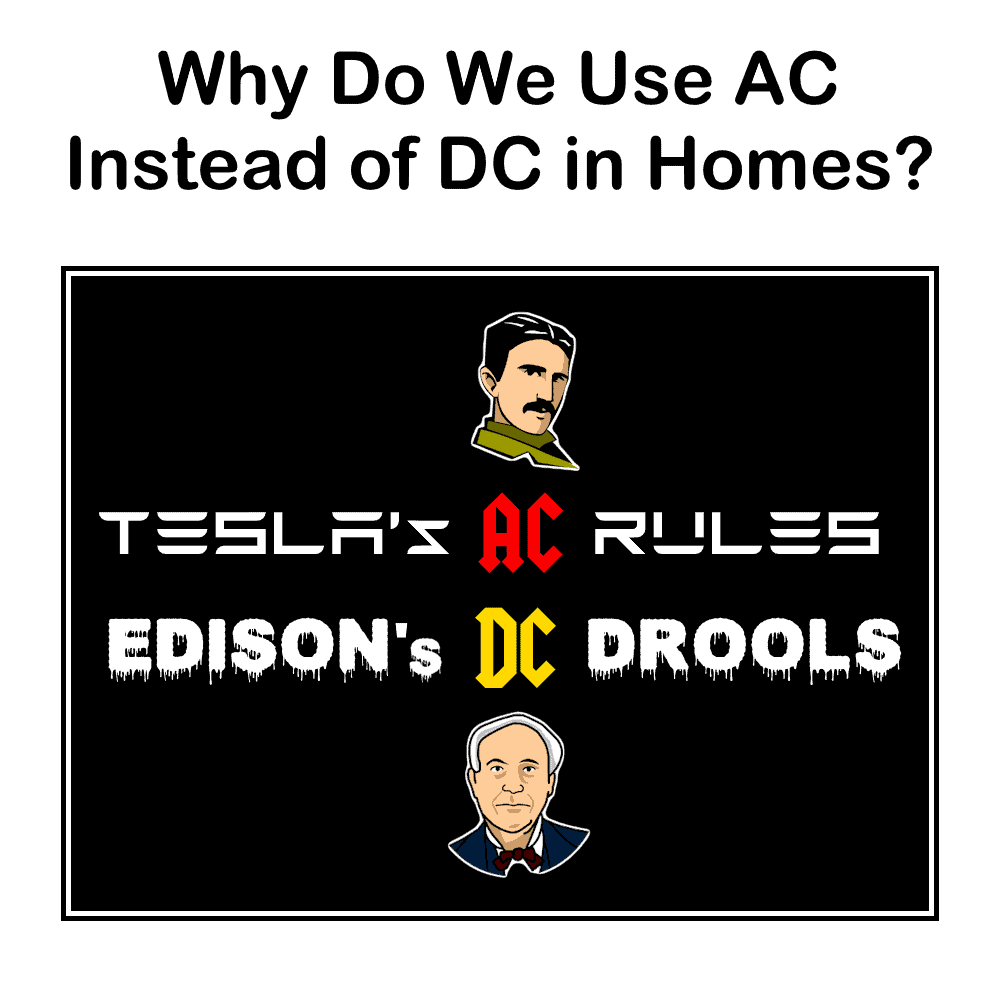
In the late 1800s, Thomas Edison (a proponent of DC) and Nikola Tesla, along with George Westinghouse (advocates of AC), were involved in what became known as the “War of the Currents.”
As a result, Tesla’s system, which championed Alternating Current (AC), ultimately prevailed over Edison’s Direct Current (DC) system. This was primarily because AC was more cost-effective and practical for large-scale, long-distance power transmission and distribution.
In the late 19th century (and even today) this remains one of the key advantages of AC over DC. That’s why AC became the standard and was widely adopted for electric power distribution.
- Related Post: Can an AC Device Operate on DC Supply, and Vice Versa?
Before going into the details, let’s first differentiate between AC and DC.
What is AC?
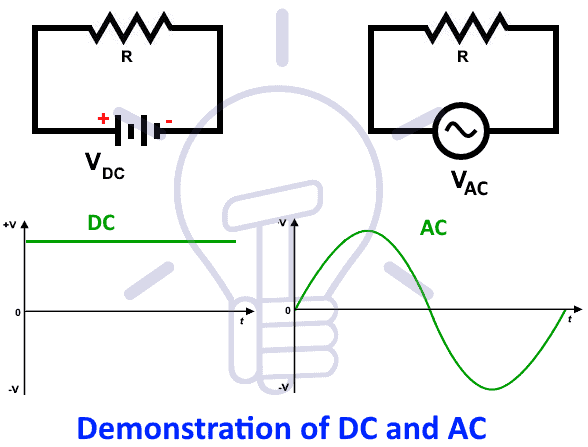
AC stands for Alternating Current, which means the flow of electric charge periodically changes direction. In most household systems, the current alternates 50 or 60 times per second (50/60 Hz). It is the standard form of electricity supplied by power stations and used in homes and businesses because it can be easily transmitted over long distances and its voltage can be adjusted using transformers.
What is DC?
DC stands for Direct Current, where the electric charge flows in a single, constant direction. It is commonly produced by batteries, solar panels, and some electronic devices. DC is ideal for low-voltage applications like smartphones, laptops, and LED lighting, but is not practical for long-distance transmission without special conversion equipment.
- Related Post: Difference between AC and DC (Current & Voltage)
Why is AC Preferred Over DC for Home Applications?
Alternating Current (AC) is commonly used in households instead of Direct Current (DC) due to several advantages and practical, technical, and economic reasons as follows:
Efficient Long-Distance Transmission
AC can be easily transformed (step-up or step-down) to high or low voltages using transformers. This practice reduces energy loss also known as line losses (I2R losses) over long distances in power lines. High-voltage AC transmission is more efficient than DC for large-scale power distribution. Once it reaches households, AC is stepped down to safer, usable voltages (e.g., 120V or 230V).
DC, in contrast cannot be transformed as easily without using expensive power converters (especially before the advent of modern power electronics). Hence, it makes DC inefficient for long-distance distribution.
Compatibility with Home Appliances
Most household appliances, like motors in refrigerators, washing machines, and air conditioners, are designed to operate efficiently on AC. AC inductions motors are simpler and cheaper to build and run than DC motors due to carbon brushes and associated issues for many applications. Therefore, it makes AC the preferred choice for manufacturers rather than DC.
Moreover, transformer is compatible with AC, which is used to step-up or step-down the level of voltage as per requirements. It is the plus point of transformer operating at AC for distributing electricity at various voltage levels i.e. high voltage for transmission and low voltage for distribution and home use. On the other hand, transformers do not work with DC.
DC requires power electronics (converters/inverters) for voltage adjustment and changes, which were expensive and inefficient in the early days of electrical grids.
Ease of Generation & Synchronization
AC is easier to generate in large quantities using rotating turbines, generators and alternators in power plants (coal, hydro, nuclear etc.). These power plants naturally produce sinusoidal waveforms i.e. AC, and the entire power grid is built around AC systems.. This aligns well with the mechanical motion of turbines driven by steam, water, or wind. In addition, synchronizing AC power sources to the grid is simpler than converting to DC.
Safety and Control
While both AC and DC can be dangerous, AC system is relatively easier to design, interrupt and control with circuit breakers and fuses compared to high-voltage DC, which is harder to switch off safely. AC also allows for flexible voltage adjustments for household appliances and lighting systems via transformers, which are designed to work with AC.
Grid Infrastructure:
The existing electrical grid worldwide is built around AC, making it impractical and costly to switch to DC. Most power generation, transmission, and distribution systems are optimized for AC. Converting homes power supply to DC would require a massive overhaul of the existing power grid including the transmission lines, substation, transformers, and protection devices.
Therefore, it is not a wise decision to go through such a lengthy and costly process just to get and use DC in the outlet instead of AC for performing the same task.
- Related Post: AC or DC – Which One is More Dangerous And Why ?
Why Not DC?
While AC dominates household use, DC is gaining traction in specific applications, like solar panels, battery-powered devices, and data centers, where DC can be more efficient. However, converting the entire grid and household systems to DC would be impractical due to entrenched AC infrastructure. Even in homes with solar panels, inverters are used to convert DC to AC for compatibility with the grid and appliances.
Yes, DC can be used for household appliances and residential application, but at a heavy cost as follows:
- Transmission Losses: DC is less efficient for long-distance transmission without expensive conversion equipment, though modern high-voltage DC (HVDC) systems are used in specific cases.
- Appliance Compatibility: Many household devices are not designed for DC, and converting them would require additional circuitry, increasing costs.
- Changing Infrastructure: AC became the standard over a century ago, and the infrastructure, appliances, and expertise are all built around it. Hence, opting for DC over AC to perform the same function is generally not practical due to the lengthy and costly process involved.
FAQs
1: Can DC be used in homes instead of AC?
Yes, but it’s not practical. Using DC would require significant changes to the existing power grid and household wiring. Most household appliances are designed to run on AC.
2: What happens if you connect an AC device designed for DC?
If you connect an AC-powered device to a DC supply, it will likely not function properly and may be damaged. AC devices often rely on the alternating nature of current for components like transformers and motors to work correctly. Supplying DC may cause overheating, malfunction, or even permanent failure.
3: What happens if you connect a DC device designed for AC?
Connecting a DC device to an AC supply can be dangerous. Since DC devices are not designed to handle the alternating voltage, the internal components may burn out or explode. For example, DC motors and circuits may not withstand the changing direction of AC, leading to immediate damage or fire hazards.
4: Is AC safer than DC for household use?
Both have risks, but AC is easier to interrupt using circuit breakers and fuses, making it generally safer to manage in residential settings.
5: Why is AC better for long-distance transmission?
AC voltage can be easily increased or decreased using transformers. Higher voltages reduce energy loss over long distances, which is why AC is ideal for power transmission.
6: Are there any devices in the home that use DC?
Yes. Devices like laptops, TVs, LED lights, and phone chargers use DC internally. However, they convert AC from wall outlets to DC using power adapters.
7: Will DC ever replace AC in homes?
Not likely on a large scale. Although DC is used in some modern applications (e.g., solar systems, electric vehicles), AC remains the standard for residential power distribution due to its infrastructure and efficiency.
Related Posts
- What Happens When an AC Line Touches a DC Line?
- What Happens if a Power Line Falls into the Ocean Water?
- What is the Difference Between AC Ground and DC Ground?
- Can you Combine AC and DC Ground in a Solar Installation?
- Should You Connect GND and 0VDC? Combined AC & DC Grounding
- Why Doesn’t DC System Require a Grounding System Similar to AC System?
- Why Do Doorbells Use Low Voltage of 12V-24V AC Instead of DC?
- Why Can’t a 12V Car Battery Electrocute You?
- Why Does an Electric Tester Not Work in DC Circuits?
- Why Do DC Motors Have Higher Starting Torque than AC Motors?
- Difference between AC and DC Transmission System & Power Lines
- Difference Between AC and DC Generator
- Difference Between AC and DC Motors
- Differences Between HVAC and HVDC
- Difference Between AC and DC Resistance
- Difference between AC Drives and DC Drives
- Difference Between GND, 0VDC, Common and Virtual Ground
- Advantages of HVDC over HVAC Power Transmission
- Why Does AC Need More Insulation than DC at the Same Voltage Level?
- Is Lightning AC or DC ?
- Will a DC Shunt Motor Operate on an AC Supply?
- Difference Between 120V and 240V/230V AC Power Supply
- What Happens if You Use a 120V Device on 240V & Vice Versa?
- Can I Use a 240V Breaker on a 120V Circuit and Vice Versa?
- Can you use 15A Breaker on 20A Circuit and Vice Versa?
- Can You use a 15A Outlet on a 20A Circuit and Vice Versa?
- Why Do Some Devices Have Dual Input Voltage Ratings?
- Why Do Electronic Circuits Use DC Current instead of AC?
-
 How to Wire and Use Tesla Gen 3 Mobile Connector Charger
-
 How to Wire 48A Level 2 Dual Port EV Charging Station
-
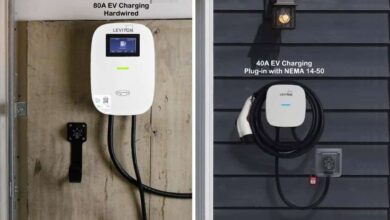 How to Wire Smart Electric Vehicle Charging Station – 32A/80A
-
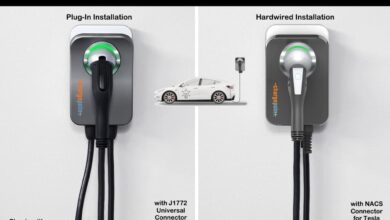 How to Wire ChargePoint Home Flex Charger for Every EV
-
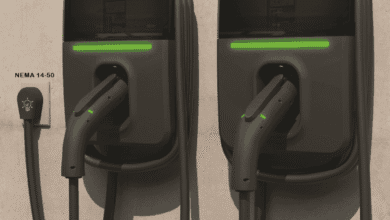 How to Wire an EV Wall Charger – Hardwired and Plug-in
-
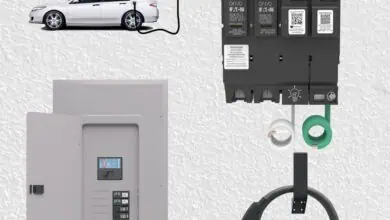 How to Wire AC Level 2 EV Smart Breaker Charger – 40A/32A